What Is a Normal Sleeping Heart Rate by Age? Read Your Ring Correctly
A sleeping heart rate often falls around 50-75 bpm in healthy adults, but the metric, your usual pattern, and symptoms matter more than matching an age chart.
Reviews, comparisons, guides, and troubleshooting for smart rings.
A sleeping heart rate often falls around 50-75 bpm in healthy adults, but the metric, your usual pattern, and symptoms matter more than matching an age chart.
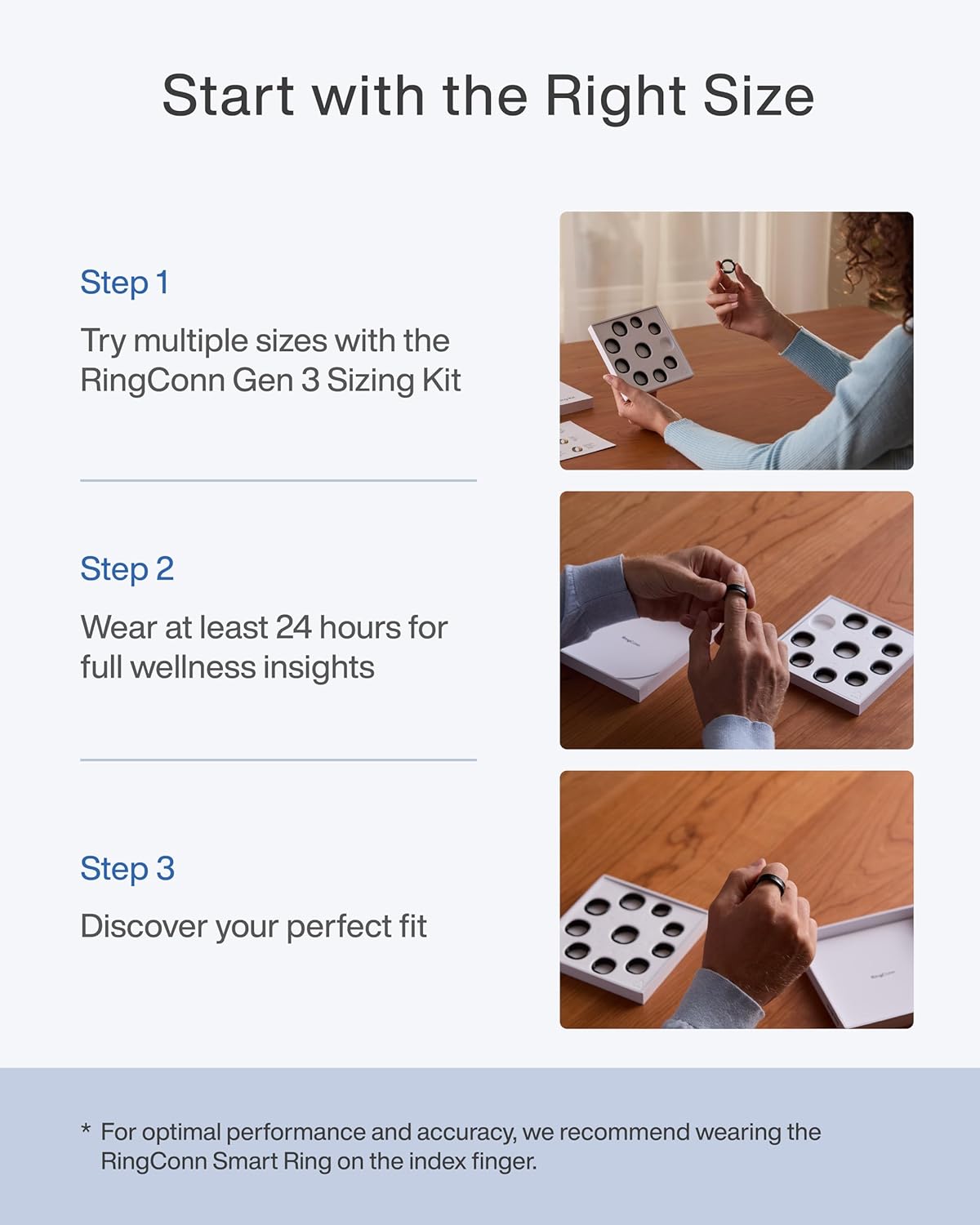
Most guides say index finger. We say: the best finger is the one that gives your ring the strongest combination of signal, stability, and sustainability. Here's how to find it.
Understand your smart ring's HRV readings through data quality, your personal baseline, recent trends, and everyday context.

Compare the blood pressure claims behind RingConn, Oura, Galaxy Ring, and Ultrahuman. See what is a reading, what is a trend, and what to buy for home BP monitoring.
Choose a women's health ring by the job you need done: cycle awareness, sleep, small-finger fit or no subscription. Understand what period predictions and fertile-window estimates cannot prove.
RingConn makes the strongest case for overnight patterns, but sleep stages, workout peaks, and isolated oxygen readings need different checks. Here is how to judge your own ring.

RingConn customer service: Email support@ringconn.com, 1-3 business day response. No phone support. Live chat on website 9am-5pm PST weekdays. Based in Shenzhen, English support available. Warranty claims, returns, troubleshooting.
RingConn Gen 3 launched globally on May 29, 2026, after May 5 preorders. Understand the CES and regional dates, sizing delays, and whether waiting makes sense.
RingConn's current direct-store policy allows a return request within 14 calendar days of delivery for specified valid reasons, not a blanket 30-day trial. Check condition, shipping, and retailer rules before buying.
RingConn's published warranty lasts one year outside the EEA and two years in EEA countries, starting at delivery. Learn what defects may qualify, why battery replacement is excluded, and how to contact support.
RingConn can't diagnose illness, but elevated skin temperature, elevated resting heart rate, dropped HRV, and disrupted SpO2 often precede symptoms by 24-48 hours. Many users catch illness early this way.
A red glow inside the RingConn ring is usually an optical sensor, not a low-oxygen warning. Gen 3 case lights use blue and orange. Learn the official 3-second restart and safe charging checks.

RingConn Gen 3 ($349, no subscription) tracks more health metrics than Whoop ($30/month, no hardware cost). RingConn wins on cost and passive health monitoring. Whoop wins on workout recovery coaching and community features.
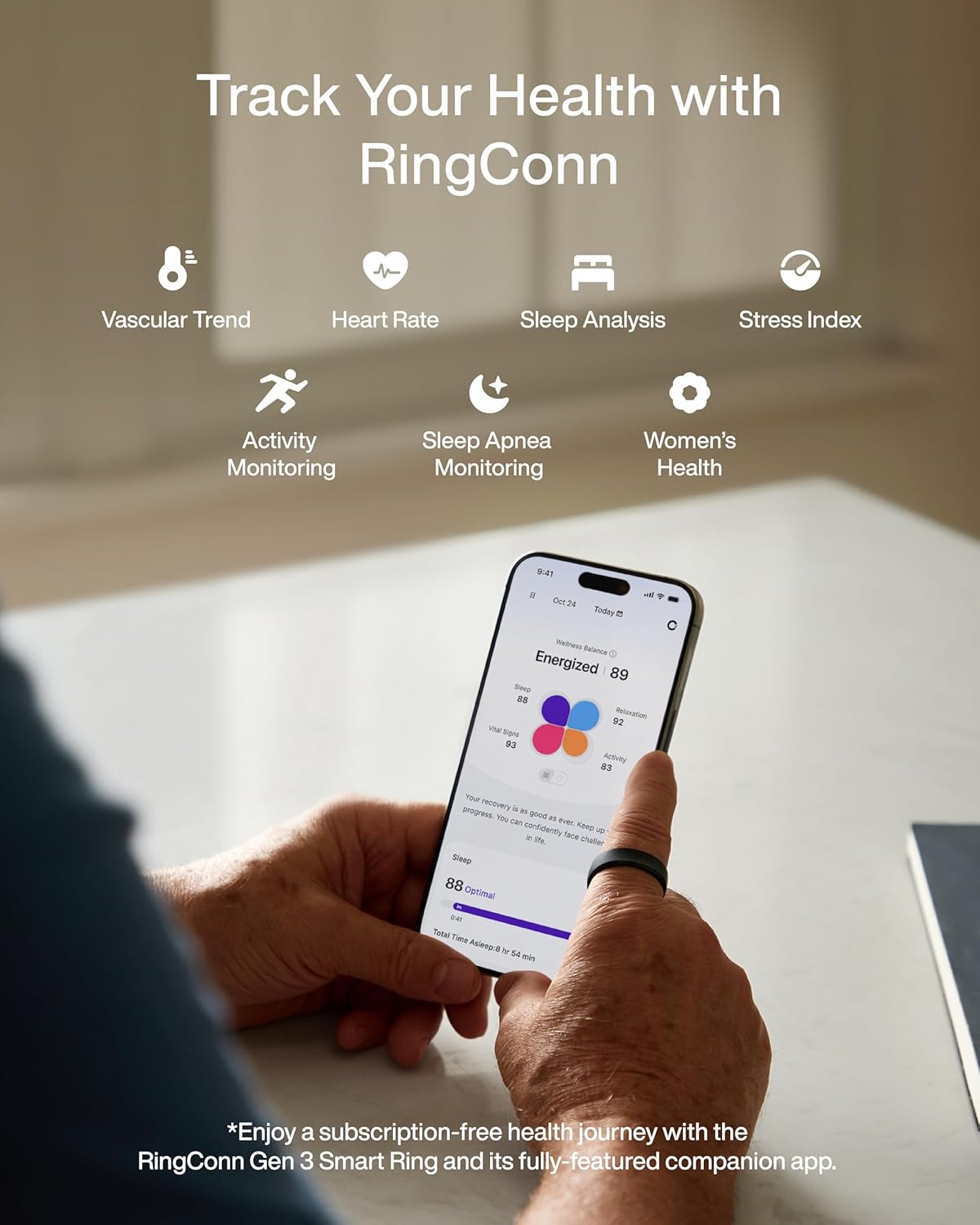
RingConn Gen 3 tracks heart rate, HRV, SpO2, breathing rate, skin temperature, blood pressure trends, sleep stages, stress, and steps. Gen 2 tracks everything except blood pressure. No subscription required for any data.
RingConn is a smart ring brand with roots in Shenzhen. Learn what the company confirms about its history, app operator, products and data practices -- and what it does not confirm about manufacturing.
Best bedtime snacks combine tryptophan + carbs: almonds, turkey, bananas, oatmeal, kiwi, tart cherry juice. Eat 30-60 min before bed. Avoid high-fat, spicy, or large portions that disrupt sleep. Track results with a smart ring.
Dreaming about your period often reflects your body's awareness of hormonal changes, stress about fertility/health, or simply anticipation if your period is due soon. Smart rings show dreams cluster in late luteal phase when progesterone peaks.
Resting heart rate increases 2-7 bpm in the luteal phase (after ovulation, before period) due to progesterone. This is completely normal. Track with a smart ring to identify your personal pattern and predict period arrival.
Brief heart rate spikes during REM sleep are normal (10-20 bpm increases). Sustained spikes over 100 bpm, frequent spikes with low SpO2, or spikes that wake you warrant medical evaluation.
RingConn measures stress through overnight HRV (heart rate variability) analysis. Low HRV = high stress. It doesn't detect real-time stress during the day, only your body's accumulated stress load from the previous day. Accuracy is good for trends, not absolute stress levels.
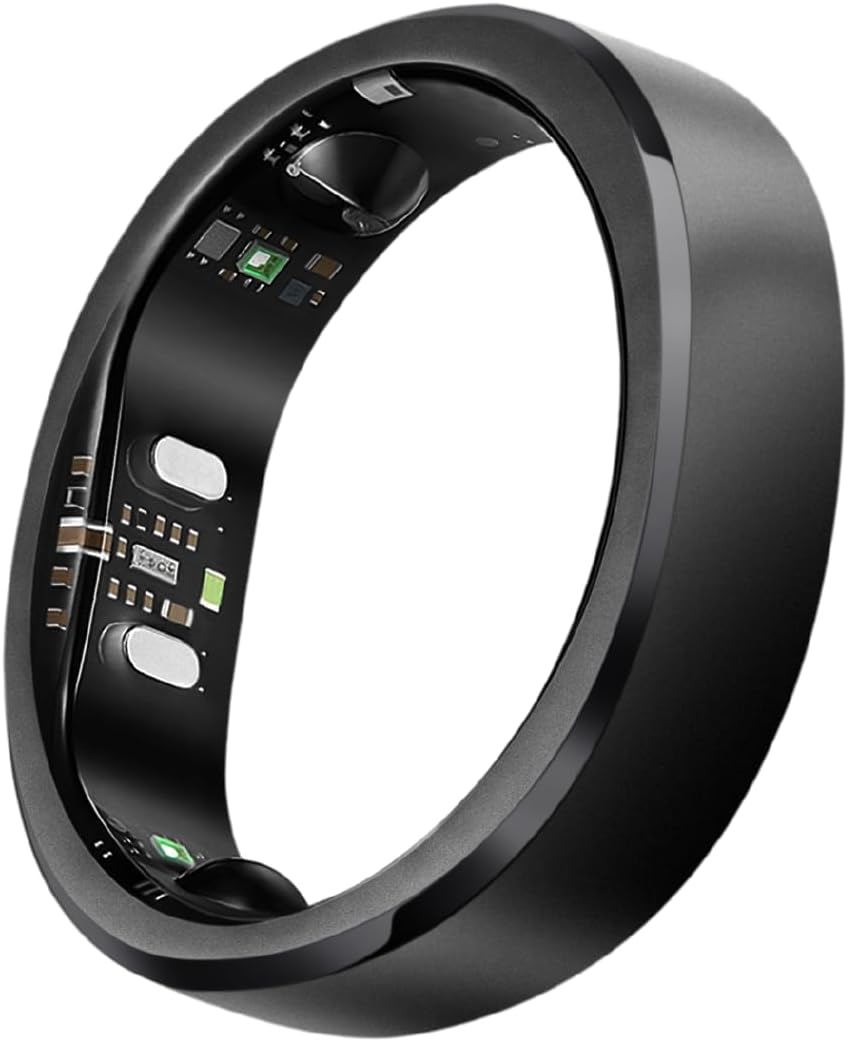
Improve heart rate recovery with consistent cardio (Zone 2, 3-4x/week), HIIT intervals, better sleep, hydration, and stress management. Most people see 5-15 bpm improvement in 8-12 weeks.
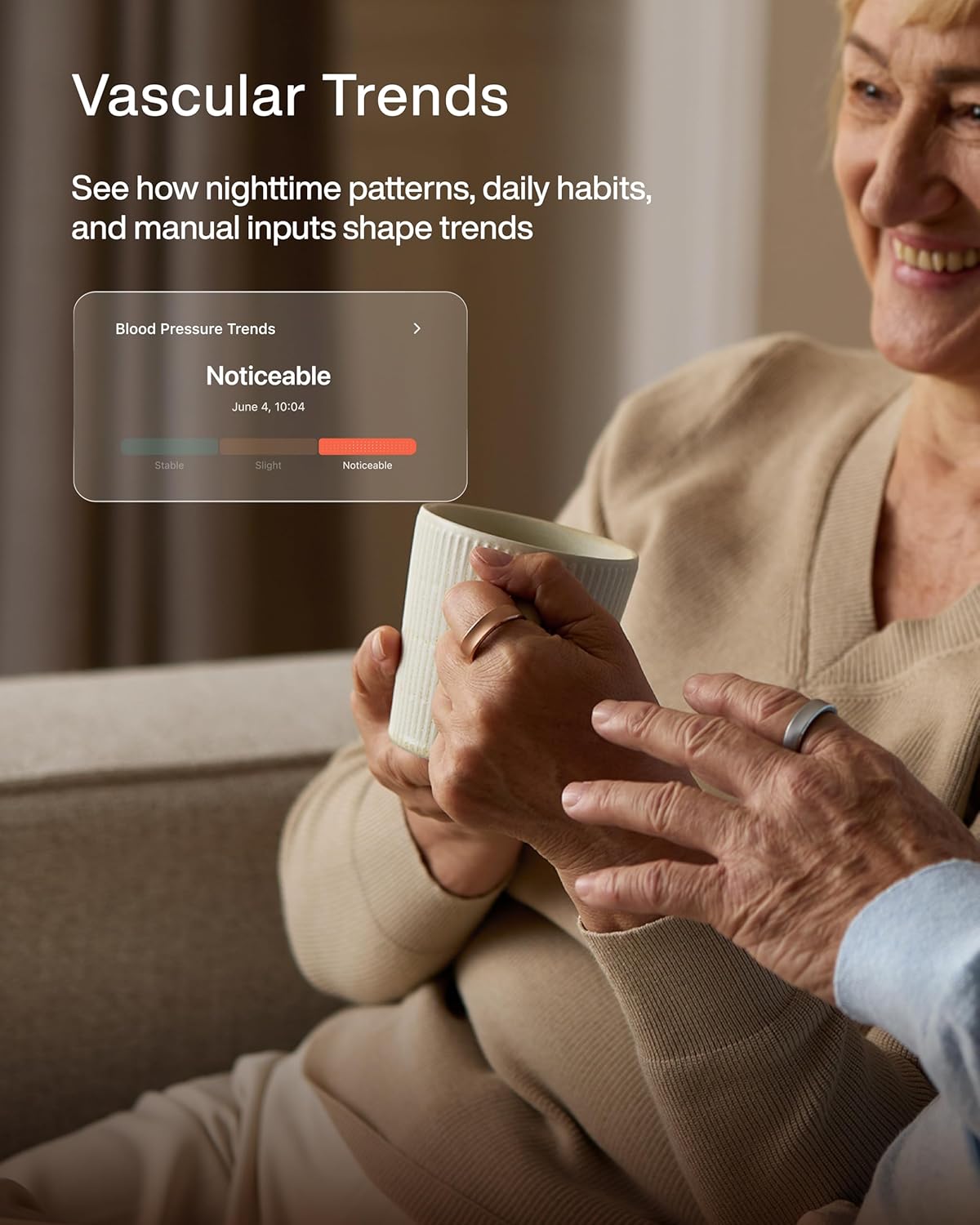
A vascular trend is not a blood pressure reading. Learn how to distinguish ring-derived patterns, cuffless estimates, and readings imported from a separate monitor.
A good heart rate recovery is 15-25+ bpm drop in the first minute after exercise. Women average 2-5 bpm slower recovery than men. Here's the full chart by age, what affects recovery speed, and how to improve yours.
A heart rate increase of 10-20 bpm when standing is normal. A jump of 30+ bpm may indicate POTS or dehydration. Here's what causes it, what's normal by age, and how to track it with a smart ring.
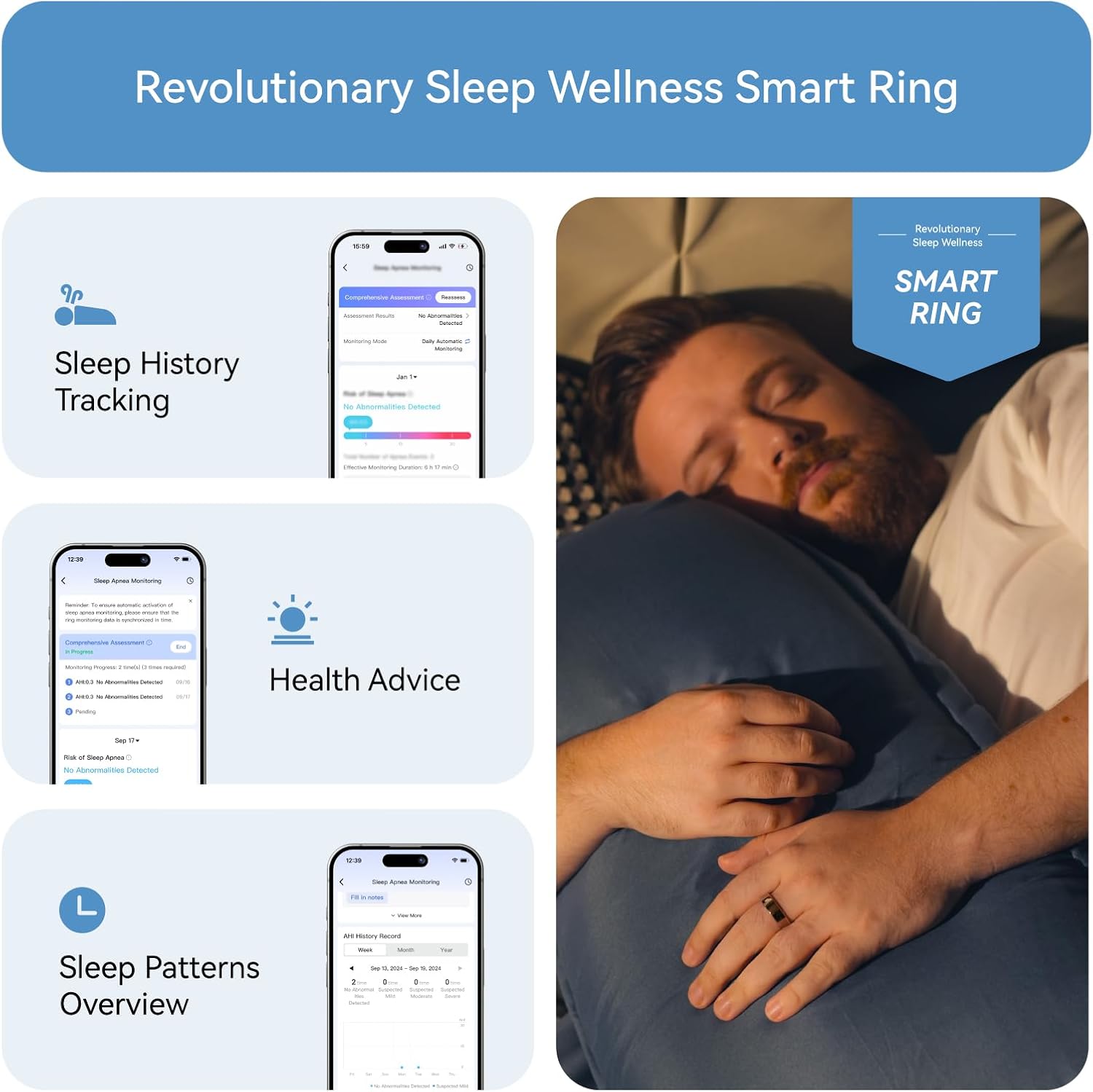
A sleeping breathing rate of 12-20 breaths per minute is normal. Under 12 BPM can indicate deep fitness, sleep apnea, or medication effects. Here's when low respiratory rate is healthy vs. concerning.
No smart ring can diagnose sleep apnea — but several can flag the warning signs. Here's what RingConn, Oura, and Ultrahuman actually measure, what the data means, and when to see a doctor.
Most smart rings and Apple Watches are NOT automatically HSA/FSA eligible — but some qualify with a Letter of Medical Necessity. Here's exactly what's covered, how to get reimbursed, and which devices have the best chance.
Magnesium, glycine, and apigenin (chamomile) have the strongest evidence for increasing deep sleep. Here's what works, what doesn't, optimal dosing, and how to track results with a smart ring.
Pink noise has stronger evidence for improving deep sleep and memory consolidation than white noise. White noise masks sound better but can be harsher. Here's what the research says and how to test which works for you.
RingConn tracks skin temperature changes that correlate with ovulation, but it doesn't explicitly label fertile windows like Oura or Natural Cycles. Here's what it actually does and what to expect.
Yes, RingConn is good for sleep and recovery tracking without a subscription. It's not good for workouts, medical monitoring, or people who want a polished app experience like Oura.
Compare RingConn.com, Amazon, and Walmart.com on current prices, returns, warranty, shipping, and sizing before choosing where to buy.
There's no public coupon code for RingConn Gen 3. But you can save up to $90 with the trade-in program. Here's every way to get the best price.
The 5 best subscription-free smart rings ranked by features, battery life, and total cost. RingConn Gen 3 takes the top spot.
A source-checked guide to five sleep-tracking rings. Choose by overnight fit, charging gaps, app detail and recurring cost, not an unsupported sleep-accuracy ranking.
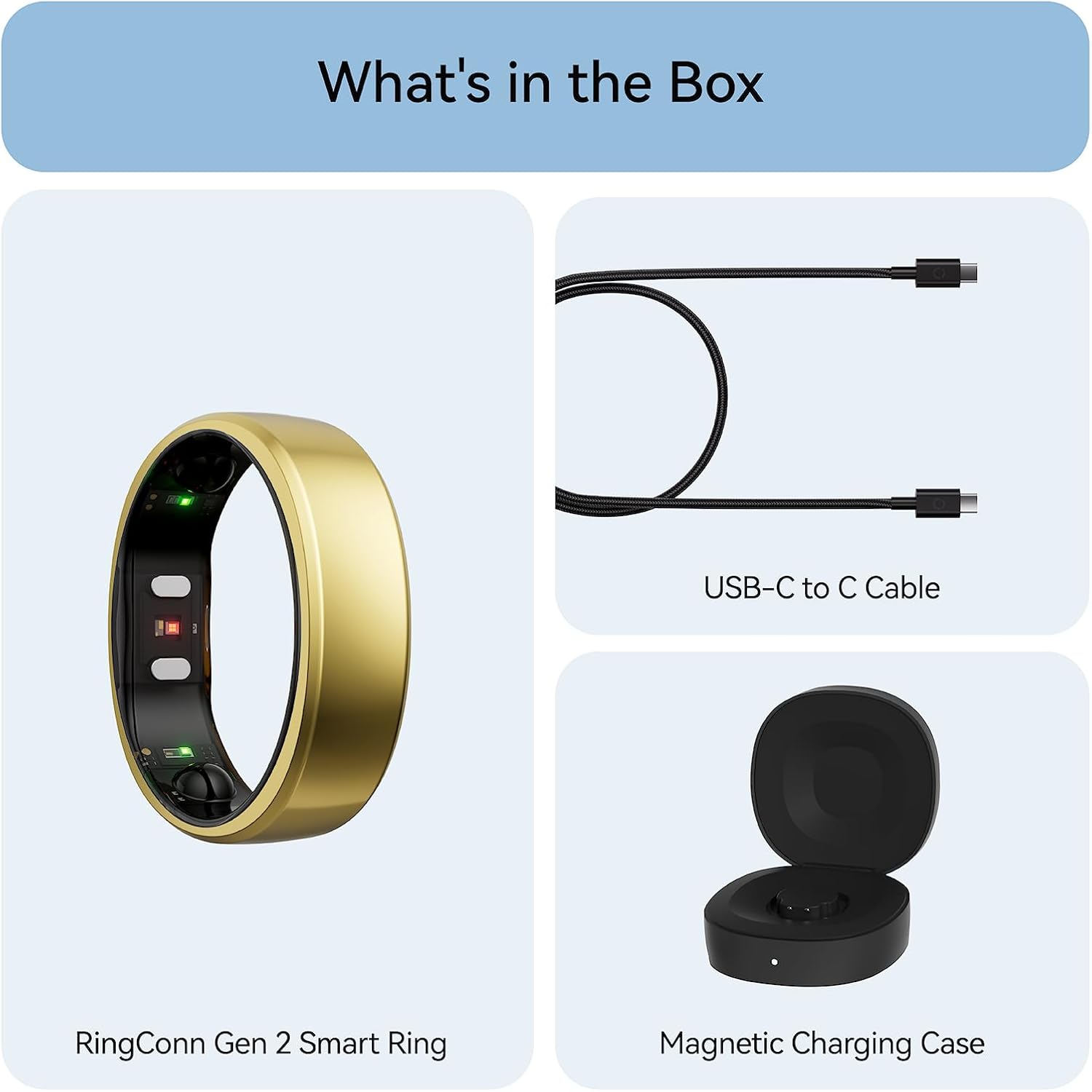
Most accuracy debates are really about fit, baselines, and expectations. Here's what RingConn data is good for, and what it's not.
RingConn Gen 2 is a strong pick if you want comfort and no subscription. The biggest regret drivers are sizing mistakes and workout expectations.
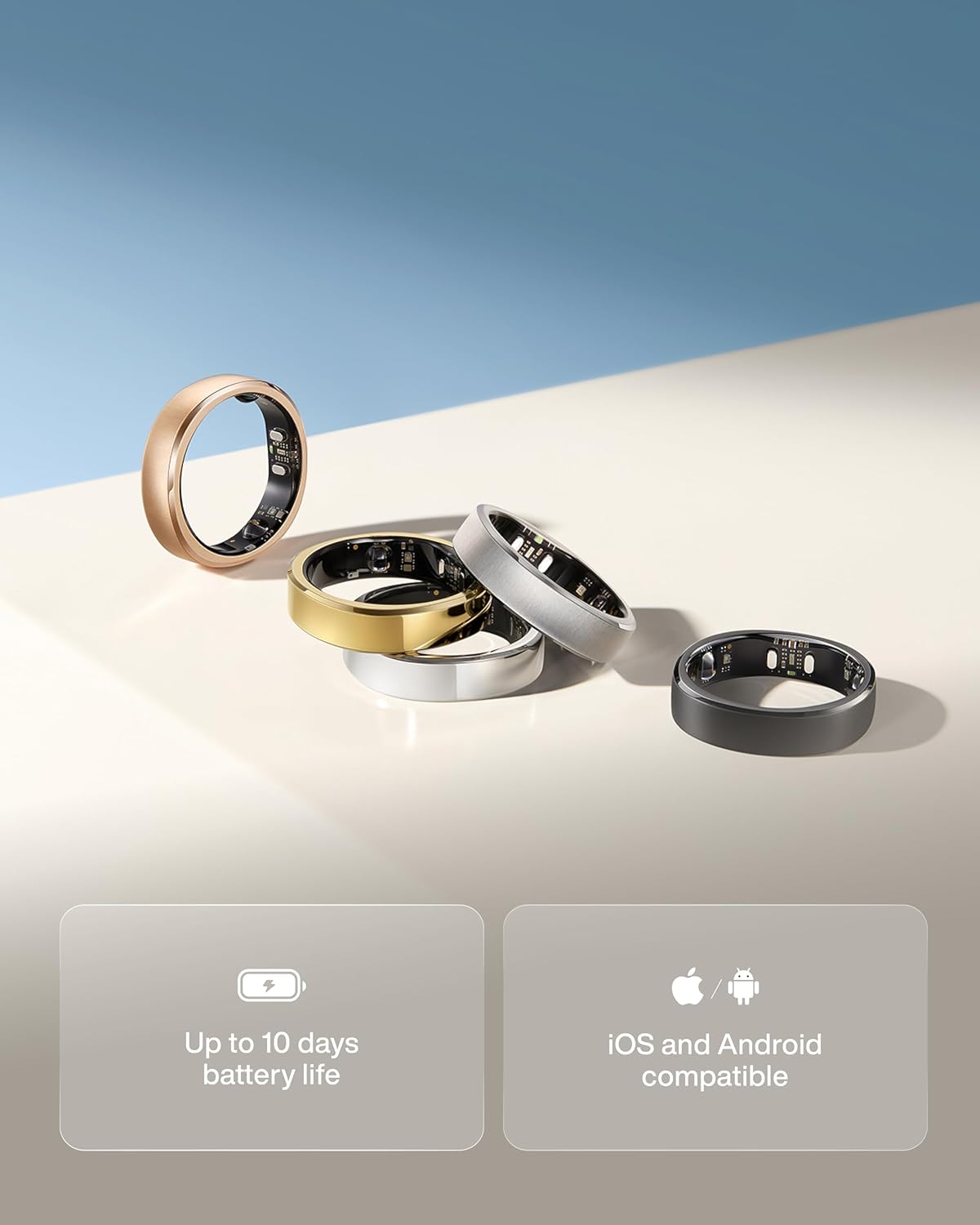
RingConn rates Gen 3 for 10-12 days with vibration enabled and 11-14 days with vibration disabled. Here is what those numbers mean, how charging works, and how the official range compares with Oura Ring 4.
Yes, RingConn Gen 3 measures blood pressure — but as overnight trends, not real-time readings. Here's how it works, what it can and can't tell you, and how it compares to a medical cuff.
RingConn Gen 3 is out now. Launched at CES 2026, it's available for $349 on Amazon and ringconn.com. Here's the full timeline, pricing, and how to save up to $90.
RingConn Gen 3 (released January 2026 at CES) adds vibration alerts, vascular health trends, universal charging case, and 10-14 day battery. $349 one-time, no subscription. Research-based review with verified specs and buying verdict.
RingConn's trade-in program accepts any smart wearable — including Oura Ring, Galaxy Ring, Apple Watch — for up to $90 off a Gen 3. Here's how it works and whether it's worth it.
Gen 3 costs $50 more but adds vibration alerts, blood pressure trends, and longer battery. Here's when the upgrade makes worth it.
RingConn Gen 3 is $349 with no subscription. Oura Ring 5 starts at $399 plus $5.99/month. Both now have blood pressure monitoring. Here's how to choose.
During exercise, rings often smooth spikes and lag behind. That’s not a RingConn-only issue, it’s a ring-category limitation.
HRV is useful as a trend, not as a daily pass/fail test. Most people misuse it by overreacting to one bad night.
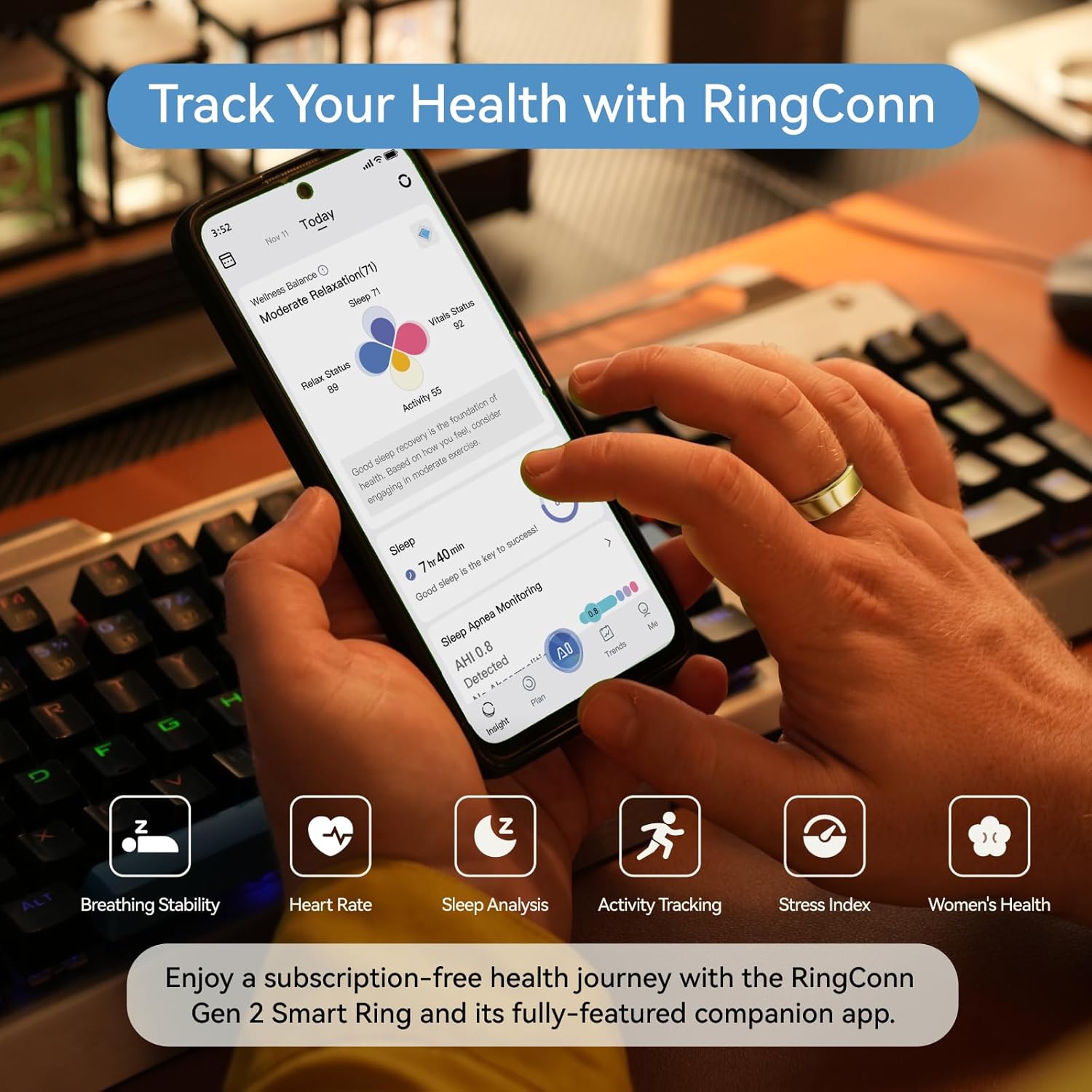
Most ‘not syncing’ cases are Bluetooth permission, battery optimization, or panic-refresh habits. Fix it in 10 minutes.
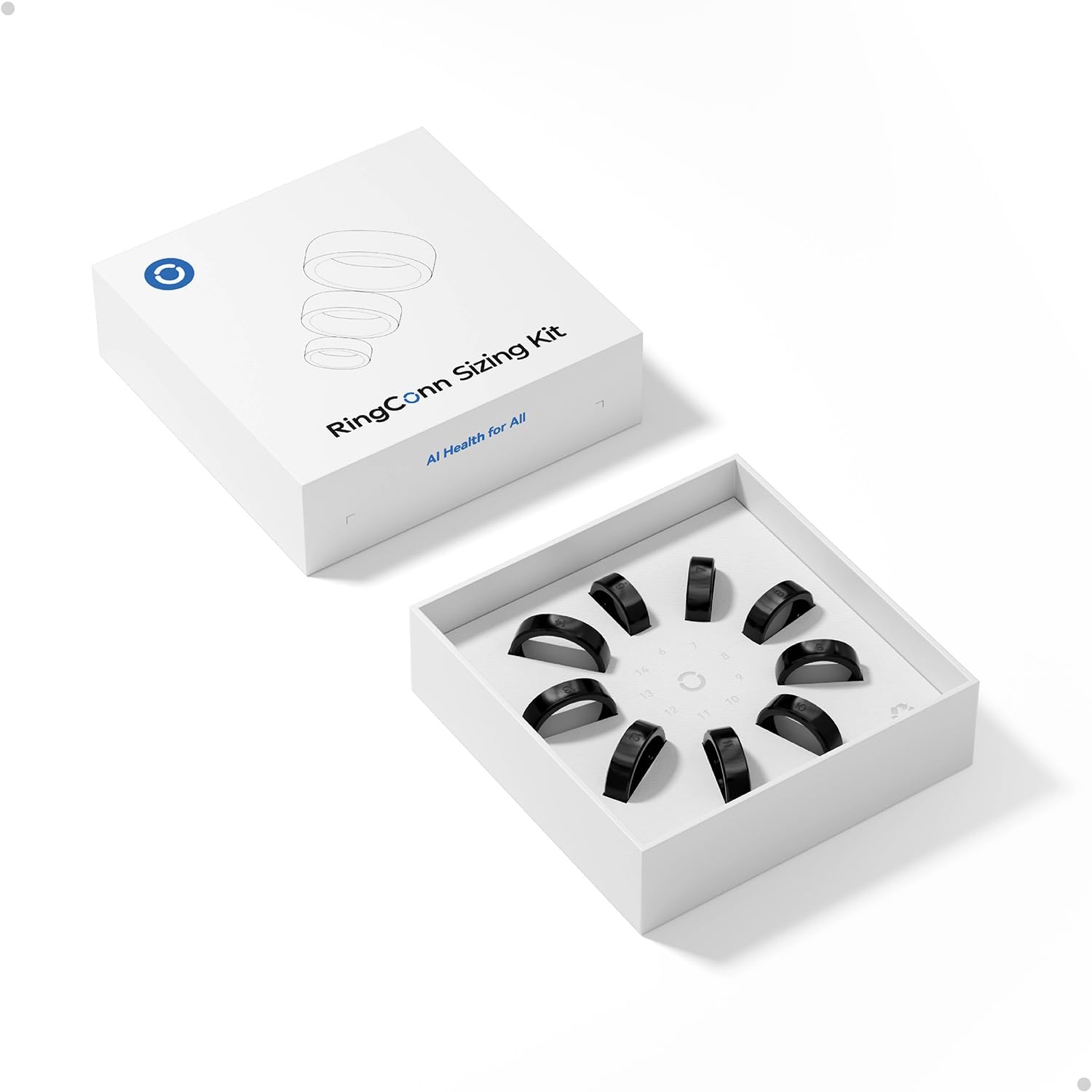
If the ring rotates at night, your readings get noisy. Use the sizing kit, pick a stable sleep fit, and avoid the 'slightly loose' mistake.
Sleep duration trends are usually useful. Sleep stages are where people overreact. Fit and baseline explain most ‘accuracy’ complaints.
Smart rings are more comfortable for sleep and last longer. Apple Watch has more features but most people take it off at night. Here's how to choose.
RingConn Gen 3 offers longer battery life, vibration alerts, and no subscription. Oura Ring 4 has stronger validation and a more mature coaching platform.
RingConn Gen 3 offers longer manufacturer-rated battery life and iPhone support; Galaxy Ring fits best in Samsung Health. Compare compatibility, health features, and current prices before buying.
Both are subscription-free, but RingConn Gen 3 has 3x the battery life, blood pressure trends, and vibration alerts. Ultrahuman wins on metabolic health and glucose integration.
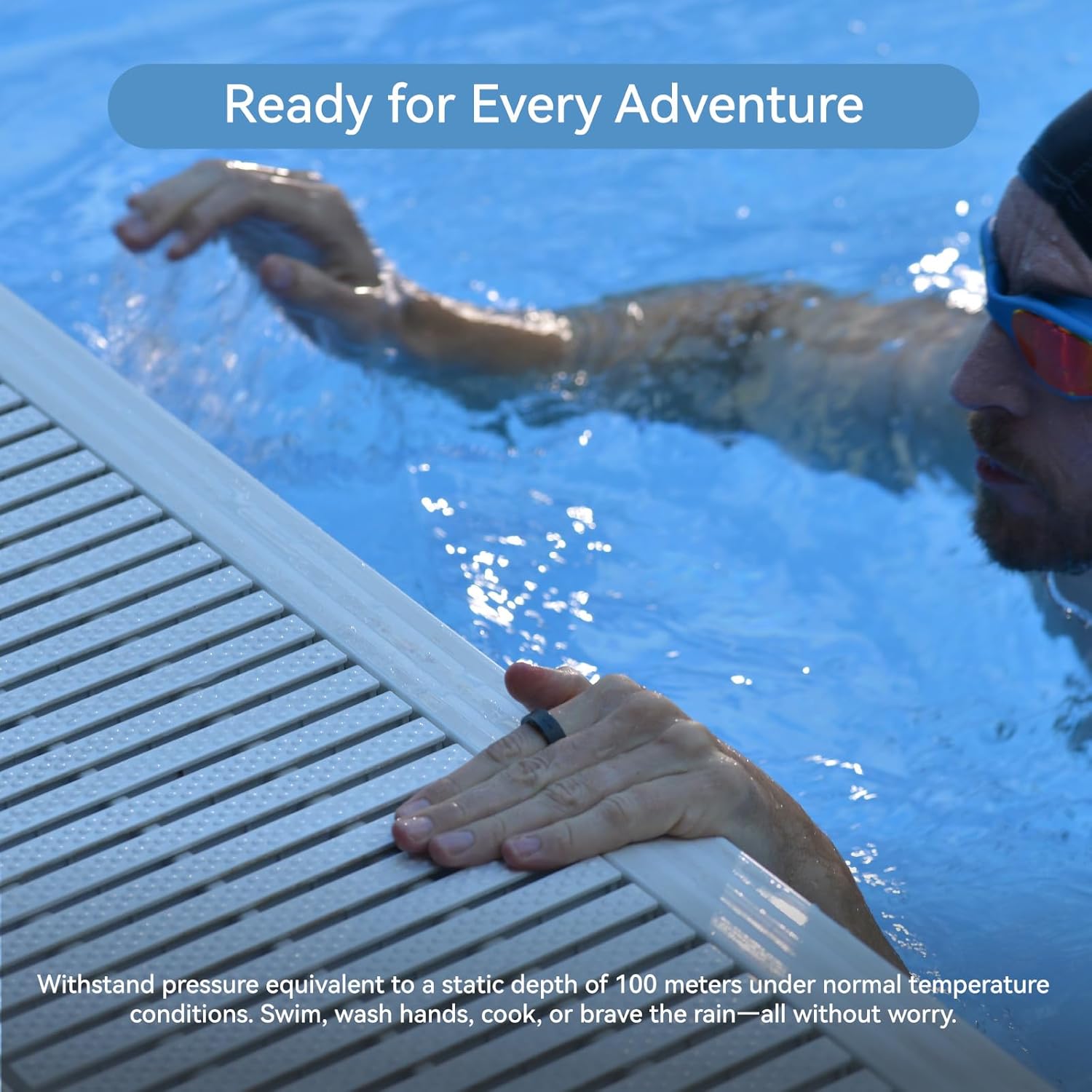
RingConn is water resistant to 100m (10ATM). You can shower and swim with it. But heat, chemicals, and loose fit are the real risk factors.
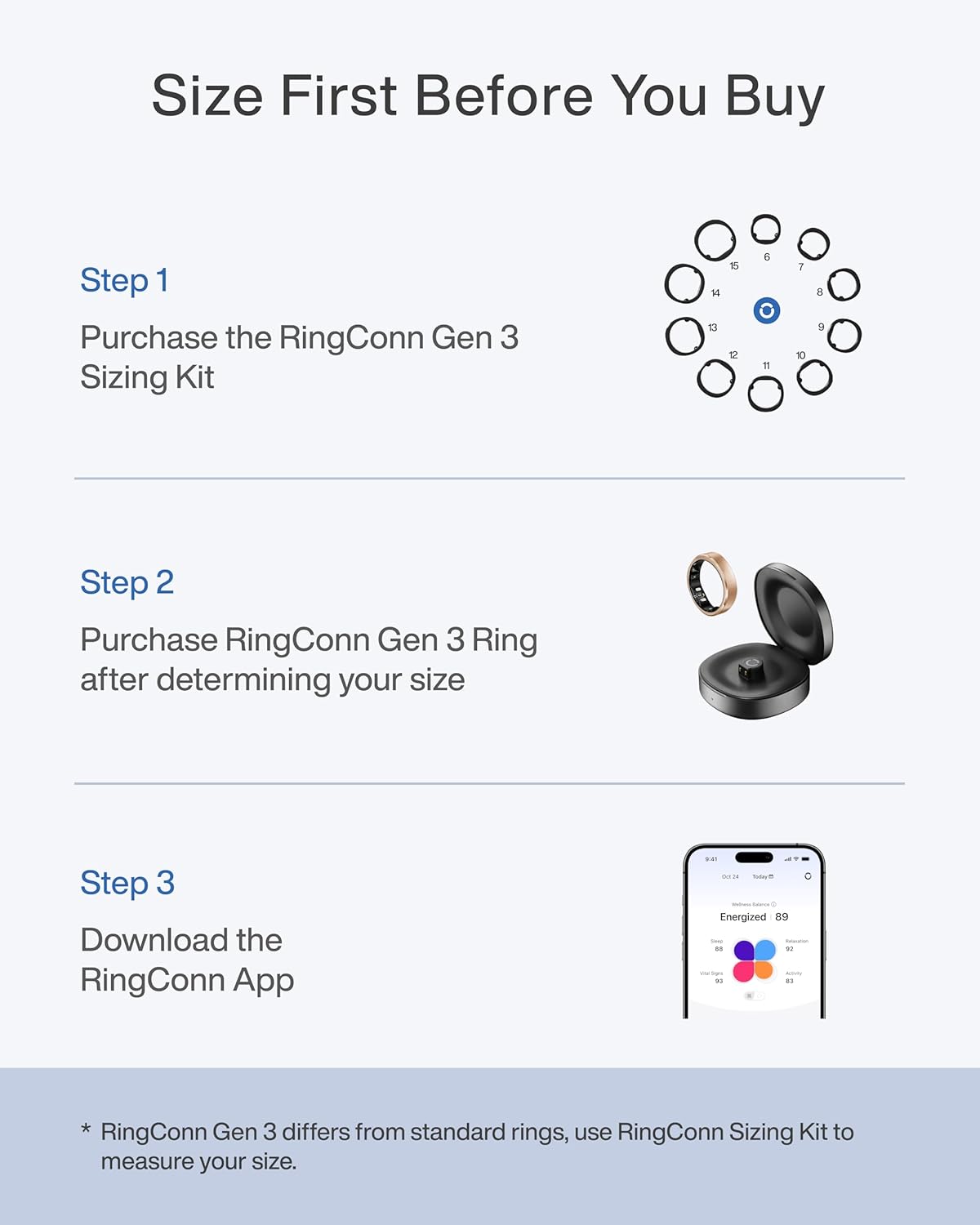
The best size is the one that stays stable during sleep. Slightly loose feels nicer, but it often creates noisy data.
Rings are optimized for passive trends, not high-intensity training. Here’s why HR and calories often look wrong during workouts.
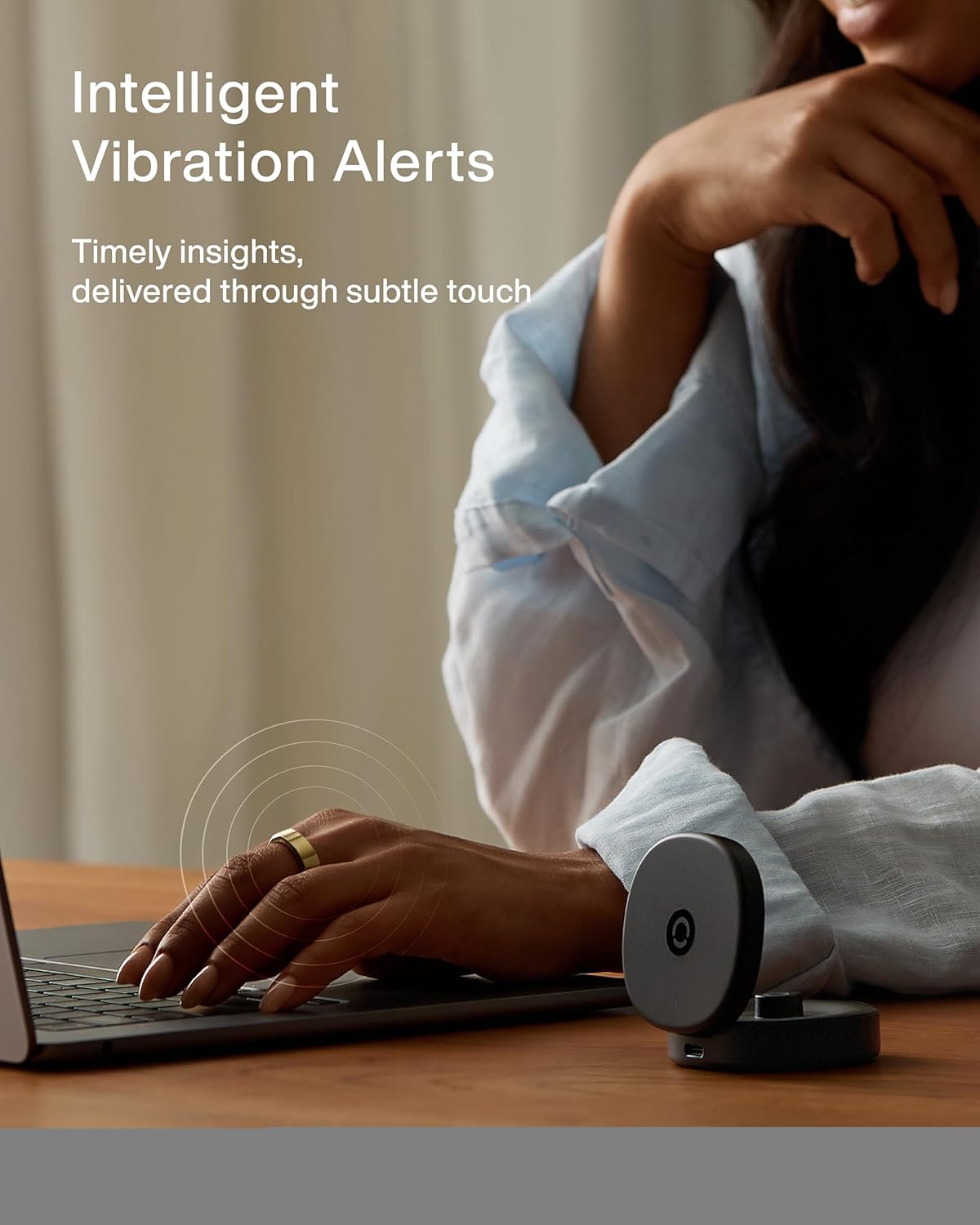
RingConn Gen 3 vibrates for health alerts, not phone notifications. Here's what the vibration feature actually covers and common misconceptions.
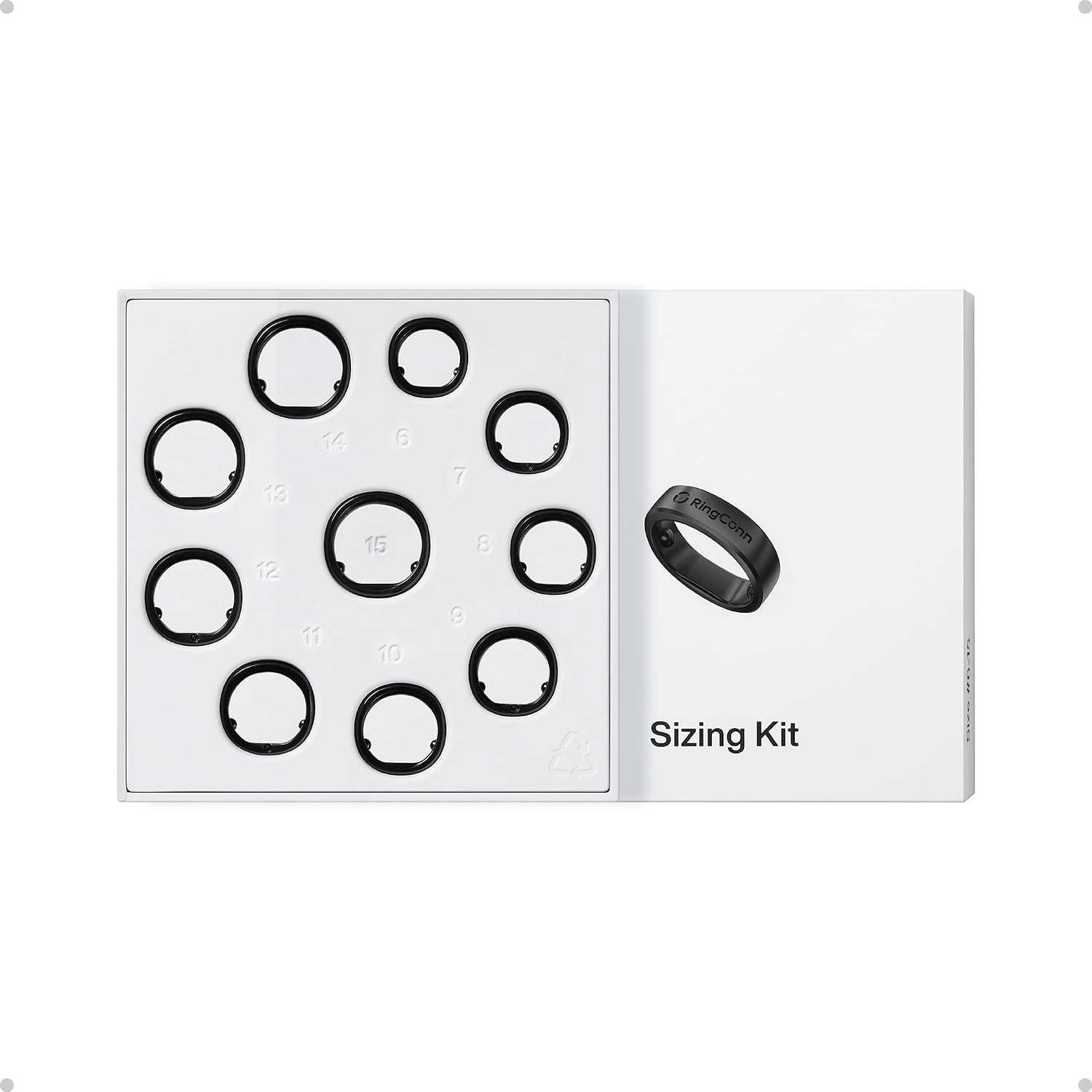
RingConn Gen 3 uses a different sizing system than Gen 2. Your old ring size won't carry over. Order the free sizing kit first.
RingConn Gen 2 Air is the cheapest RingConn smart ring, but the lower price comes with real tradeoffs. Here is who should buy it, and who should pay more for Gen 2.
Most ‘app complaints’ come from checking too often and expecting live feedback. Rings work best with a once-a-day rhythm.
If you care about ownership, verify export and integrations early. Don’t wait until month three to discover limits.
Firmware updates can improve stability, but rushing updates often creates avoidable stress. Use one simple rule.
Most sync problems are expectation problems. Rings sync in batches, they don’t behave like live workout watches.
Android users often expect watch-like behavior. Smart rings behave more like passive trackers that sync in batches.
Rings aren’t meant to be constantly ‘live’. Occasional reconnects happen, but repeated drops usually have one of a few causes.
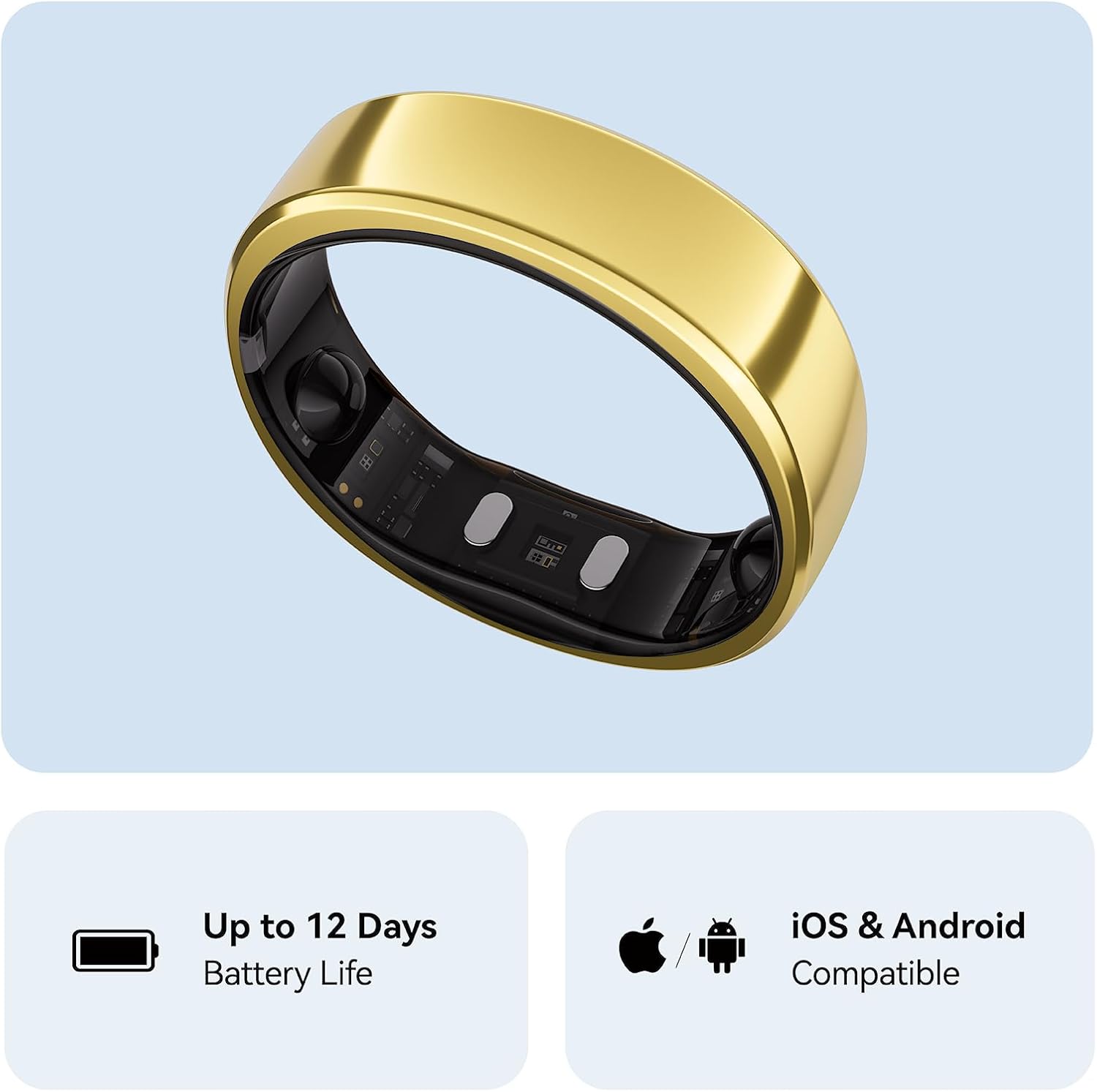
Battery life is not just a number, it’s a habit. The best setup is the one that avoids daily charging anxiety.
Gen 3 and Gen 2 use battery charging cases; Gen 2 Air ships with a wired dock. Learn what each model's indicator lights mean, how long charging takes, and safe fixes when charging fails.
Most rings will scratch if you lift weights or handle metal daily. The real decision is whether you care about cosmetic wear.
Skin temperature trends can be useful, but single-night changes are noisy. The value is in patterns over time.
Stress scores are best used as a reflection tool, not a diagnosis. The value is in patterns, not precision.
Step counts vary because different devices measure different motion signals. The ring isn’t ‘wrong’, it’s measuring differently.
Rings collect trends and sync in batches. If you expect second-by-second updates, you’ll feel constant ‘bugs’ that aren’t real bugs.