Does RingConn Measure Blood Pressure? How Gen 3 BP Tracking Works
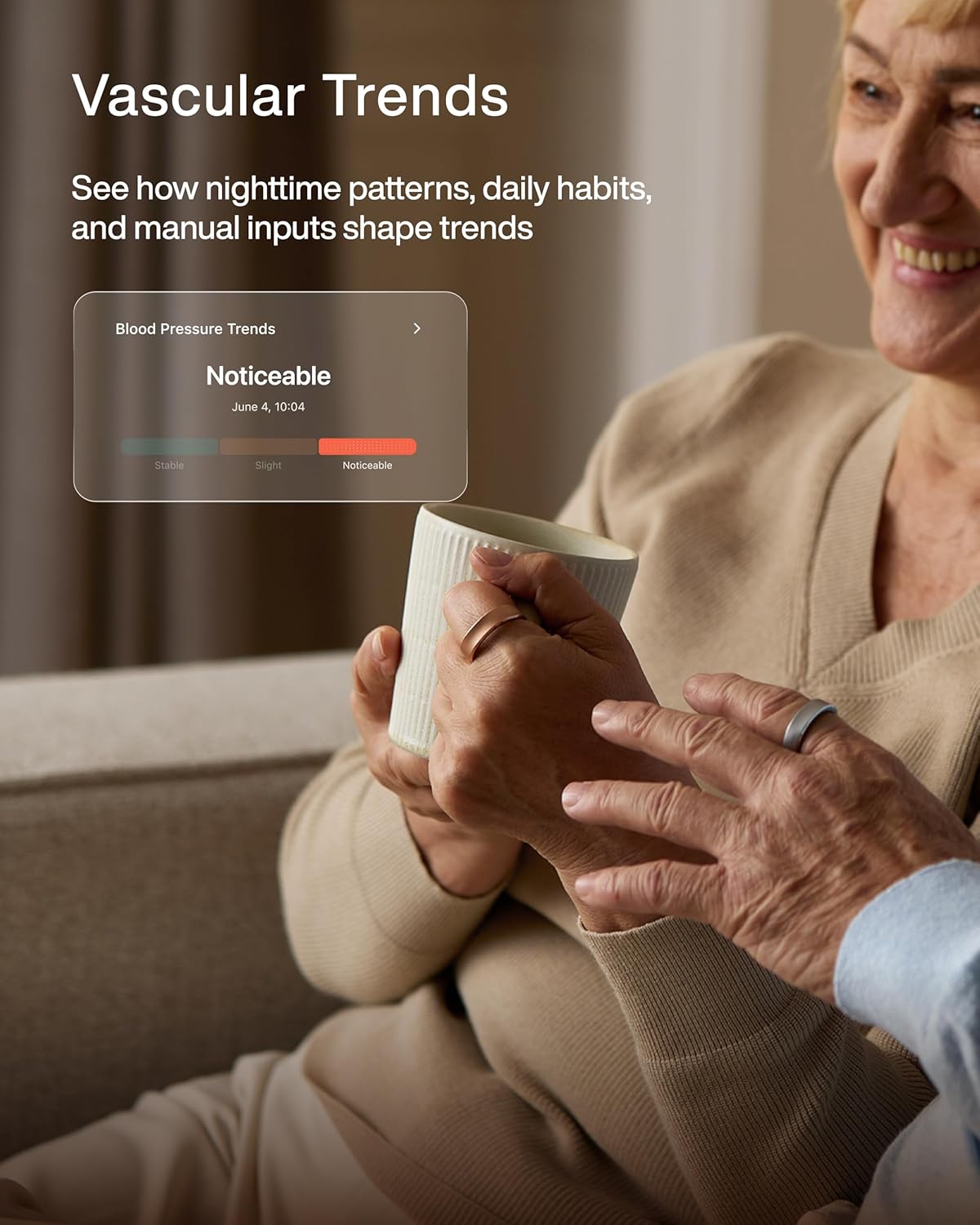
RingConn Gen 3’s blood pressure monitoring is one of its headline features. But it’s easy to misunderstand what it actually does. For a full overview of the ring, see our RingConn Gen 3 review.
This is not a cuff-style blood pressure monitor. You can’t check your BP right now like you would with a medical device.
What it actually does
RingConn Gen 3 tracks blood pressure trends automatically while you sleep.
- It measures overnight, not during the day
- It shows patterns over weeks, not single readings
- It’s relative trends, not absolute values (like 120/80)
The sensors use photoplethysmography (PPG) to estimate vascular health signals. This is different from how a traditional cuff works. For details on how PPG accuracy varies across metrics, see our RingConn accuracy guide.
What it’s useful for
Good for:
- Seeing how your BP patterns change over weeks
- Correlating BP trends with sleep quality, stress, alcohol, exercise
- Pairing with HRV data for a fuller recovery picture
- Noticing unusual patterns that might prompt a doctor visit
Not useful for:
- Checking “what’s my blood pressure right now”
- Replacing a medical cuff for hypertension management
- Getting absolute values (120/80 style readings)
Important limitations
-
Not FDA-approved as a medical device
- This is wellness tracking, not clinical monitoring
- If you have hypertension, you still need a real cuff
-
Only works while sleeping
- No daytime readings
- No readings during exercise or stress events
-
Takes time to show meaningful data
- One night isn’t useful
- You need weeks of data to see real patterns
-
Already in beta for Gen 2 users
- Gen 2 owners had early access to this feature
- Gen 3 just makes it official and more refined
Who should care about this feature
Useful if:
- You want to understand how lifestyle affects your vascular health
- You’re curious about sleep-BP correlations
- You already track sleep and recovery, and want another data layer
If you’re comparing Gen 3 to the competition, see our RingConn Gen 3 vs Oura Ring 5 comparison.
Not worth upgrading for if:
- You just want sleep tracking (Gen 2 does this fine)
- You need actual BP values for medical reasons
- You don’t care about long-term trend data
How to use it effectively
- Wear consistently - Missing nights means missing data. The Gen 3 battery life helps here — less charging means fewer gaps.
- Wait for patterns - Don’t obsess over one night’s reading
- Compare with lifestyle factors - Look at how alcohol, late nights, stress days correlate with BP trend changes
- Don’t replace medical monitoring - If you have hypertension, this doesn’t replace your cuff
RingConn BP vs traditional cuff: what’s the difference?
| RingConn Gen 3 | Traditional BP Cuff | |
|---|---|---|
| Measurement type | Relative trends (PPG-based) | Absolute values (mmHg) |
| When it measures | Overnight while sleeping | On-demand, anytime |
| Output | Trend direction (rising/stable/falling) | Exact numbers (e.g. 120/80) |
| Medical grade | No (wellness device) | Yes (FDA-cleared models) |
| Useful for | Pattern tracking over weeks | Diagnosis and medication management |
| Effort required | Zero (automatic) | Manual (sit still, apply cuff) |
| Cost | Included in $349 ring | $30–$80 standalone |
Can other smart rings measure blood pressure?
As of 2026, RingConn Gen 3 is the only consumer smart ring that offers any form of blood pressure monitoring. Neither Oura Ring 5, Samsung Galaxy Ring, nor Ultrahuman Ring Air track BP.
Samsung Galaxy Watch has a BP feature (with cuff calibration required), but no ring-form-factor competitor offers this yet.
This makes blood pressure trend tracking a genuine differentiator for RingConn — not just a marketing gimmick.
Sources
- RingConn Gen 3 product page (vascular/blood pressure trend description + disclaimers): https://ringconn.com/pages/ringconn-gen-3
- RingConn blog announcement (blood pressure insights + vibration alerts): https://ringconn.com/blogs/news/gen-3-smart-ring-blood-pressure-alerts
- Lifehacker review (describes BP setup/calibration flow and early impressions): https://lifehacker.com/health/ringconn-3-review
- Background explainer on cuff-less BP trend tracking (third-party): https://cardilog.app/blog/ringconn-smart-ring-blood-pressure
What to read next
- RingConn Gen 3 review
- RingConn Gen 3 vs Gen 2
- RingConn Gen 3 vs Oura Ring 4
- RingConn Gen 3 sizing guide
- Best smart rings without subscription
Interested in trying blood pressure trend monitoring? Check the RingConn Gen 3 on Amazon →