RingConn Accuracy Guide (2026): What's Reliable vs What's Noisy
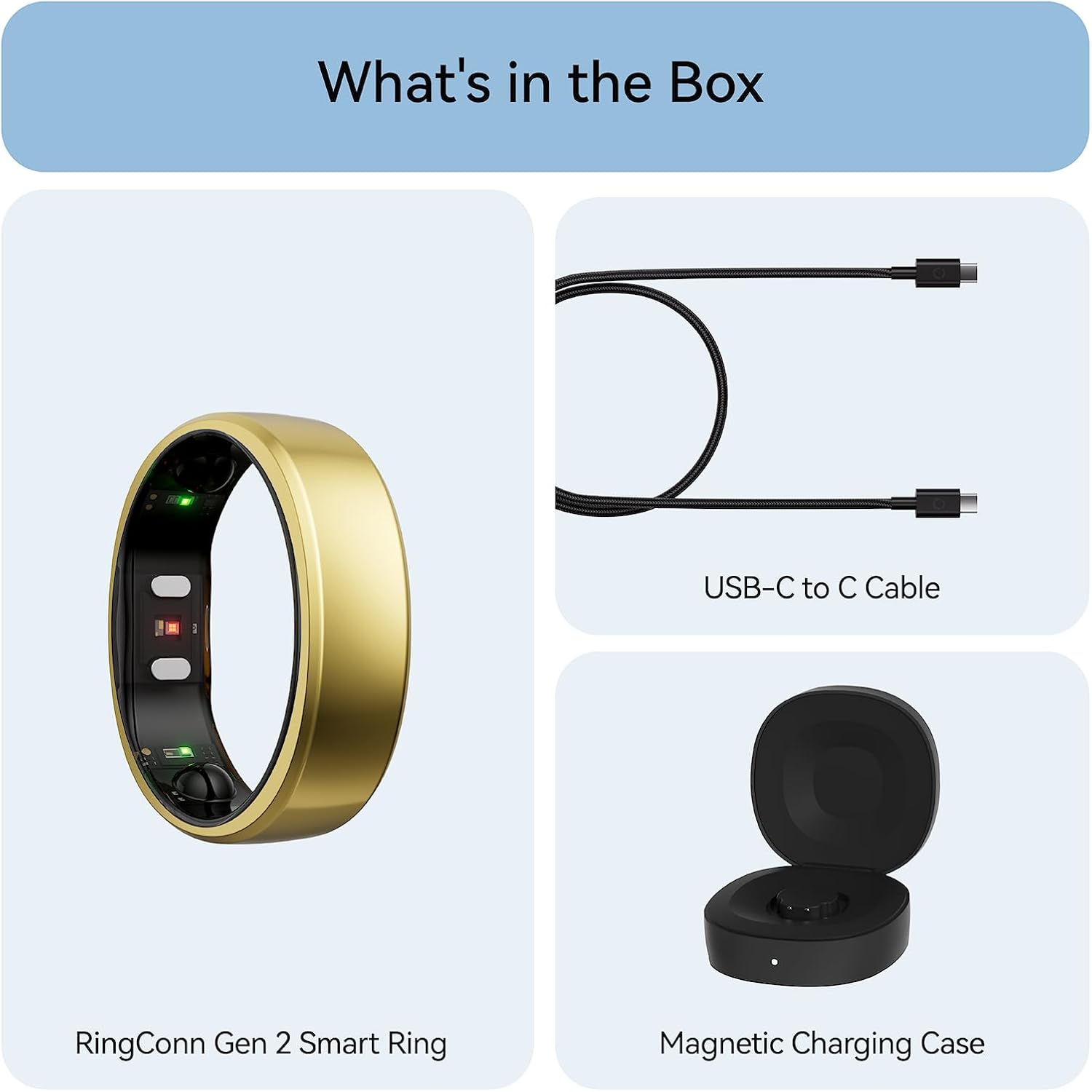
If a smart ring score feels “random”, it’s usually because the expectation is wrong.
Rings are not trying to give second-by-second truth. They’re trying to give trend-level insight with minimal friction.
What RingConn actually measures
RingConn uses PPG (photoplethysmography) optical sensors to measure:
- Heart rate: Blood flow changes detected by light reflection
- HRV: Variation between heartbeats, proxy for recovery/stress
- Sleep: Movement + HR patterns to estimate sleep stages
- Temperature: Nighttime skin temperature trends
- Activity: Movement patterns to estimate steps
Source: RingConn technology overview
Accuracy by metric
| Metric | Accuracy level | Best use | Limitation |
|---|---|---|---|
| Resting HR | Good | Weekly trends | Affected by fit, position |
| HRV | Good | Recovery patterns | Needs baseline, affected by stress |
| Sleep duration | Good | Trend tracking | Not minute-perfect |
| Sleep stages | Moderate | Pattern recognition | Not EEG-level |
| Workout HR | Poor | Not recommended | Optical sensors fail during movement |
| Steps | Moderate | Rough estimate | Hand movement bias |
| Temperature | Good | Trend tracking | Single point, not body temp |
Sources: User reports from Reddit r/smartrings, RingConn forums, and comparison with chest strap data.
What tends to be most reliable
Resting heart rate trends: RingConn’s resting HR is useful for seeing patterns over weeks. Day-to-day variation is normal, but the trend direction (up/down) is meaningful.
Sleep duration: RingConn tracks when you slept and roughly how long. It’s not minute-perfect, but useful for seeing “did I sleep 6 hours or 8 hours?” For a deep dive, see our RingConn sleep tracking accuracy breakdown.
HRV trends: HRV direction (improving vs declining) is useful for recovery patterns. Single-day HRV numbers are less meaningful than 7-day averages. We explain this in detail in RingConn HRV explained.
What tends to be noisy
Steps and calories: Rings count steps based on hand movement. If your hands are stationary while walking (pushing a cart, holding a phone), steps are underestimated. If you move your hands a lot while sitting, steps are overestimated.
Workout heart rate: This is the #1 disappointment source. Optical sensors struggle during movement. Heart rate spikes, drops, and irregular rhythms cause inaccurate readings. See RingConn heart rate accuracy during workouts for what to expect.
Stress and readiness on day 1-3: These scores need a baseline. The first 1-2 weeks of data are less meaningful. Users who check daily without baseline get frustrated.
Why fit affects accuracy
Smart rings use optical sensors. Those sensors need stable skin contact.
When the ring is slightly loose:
- Small gaps let ambient light leak in
- The ring rotates, so the sensor reads different spots
- Movement changes pressure, which changes the signal
- Sleep makes it worse because you roll and flex for hours
Fit is not just comfort. Fit is signal quality.
A loose ring causes:
- Inconsistent HRV readings
- Missing sleep data segments
- Erratic readiness scores
See RingConn sizing guide for proper fit instructions.
Comparison with other devices
RingConn vs chest strap (Polar H10, Garmin HRM-Pro):
- Chest strap: Accurate workout HR, real-time data
- RingConn: Not accurate during exercise, trend data only
See our RingConn Gen 3 review for how sensor accuracy plays out in daily use.
RingConn vs Oura:
- Both use similar PPG sensors
- Accuracy is comparable
- Difference is app polish, not sensor quality
RingConn vs smartwatch (Apple Watch, Garmin):
- Watch: Better for workout HR, live data
- RingConn: Better for sleep (worn 24/7), passive tracking
Source: Comparison discussions on Reddit r/smartrings and DC Rainmaker reviews.
A simple workflow that reduces disappointment
Check once per day (morning): Don’t check every hour. Rings are for trends, not live updates.
Compare to your own baseline: Compare today vs your 7-day average, not vs someone else’s numbers.
Use rings for trends, use chest strap for workouts: Rings are passive trackers. Chest straps are active workout tools.
Wait for baseline: Don’t interpret readiness or stress scores until you have 2+ weeks of data.
Common causes of “random” data
- Loose fit: Ring rotates during sleep, sensor reads different spots
- Inconsistent wear: Missing nights breaks baseline
- Checking too early: Day 1-3 data is noise, not insight
- Wrong expectations: Expecting workout HR accuracy from a ring
- Position changes: Ring worn on different fingers, different positions
When to trust the data
Trust when:
- Ring fits snugly, doesn’t rotate
- You’ve worn it consistently for 2+ weeks
- You’re looking at trends, not single-day numbers
- You’re checking resting HR, HRV, sleep duration
Don’t trust when:
- Ring is loose or rotates
- You’ve only worn it for a few days
- You’re checking workout HR
- You’re comparing to someone else’s numbers
FAQ
Q: Is RingConn accurate for sleep tracking? A: Sleep duration is reliable for trends. Sleep staging is useful for patterns, not clinical diagnosis. It’s not EEG-level accuracy.
Q: Is RingConn accurate for workout heart rate? A: No. Optical sensors struggle during movement. For workout HR, use a chest strap (Polar H10, Garmin HRM-Pro).
Q: Why does my RingConn data look random? A: Usually caused by: loose fit (ring rotates), inconsistent wear, or checking data before baseline is built (first 1-2 weeks).
Q: How long does RingConn need to build a baseline? A: 1-2 weeks for basic trends. 3-4 weeks for meaningful readiness patterns. Don’t interpret day 1-3 data.
Q: Is RingConn as accurate as Oura? A: Both use similar PPG sensors. Accuracy is comparable. The difference is app polish and coaching, not sensor quality.