RingConn Sleep Tracking Accuracy: What to Trust and What to Ignore
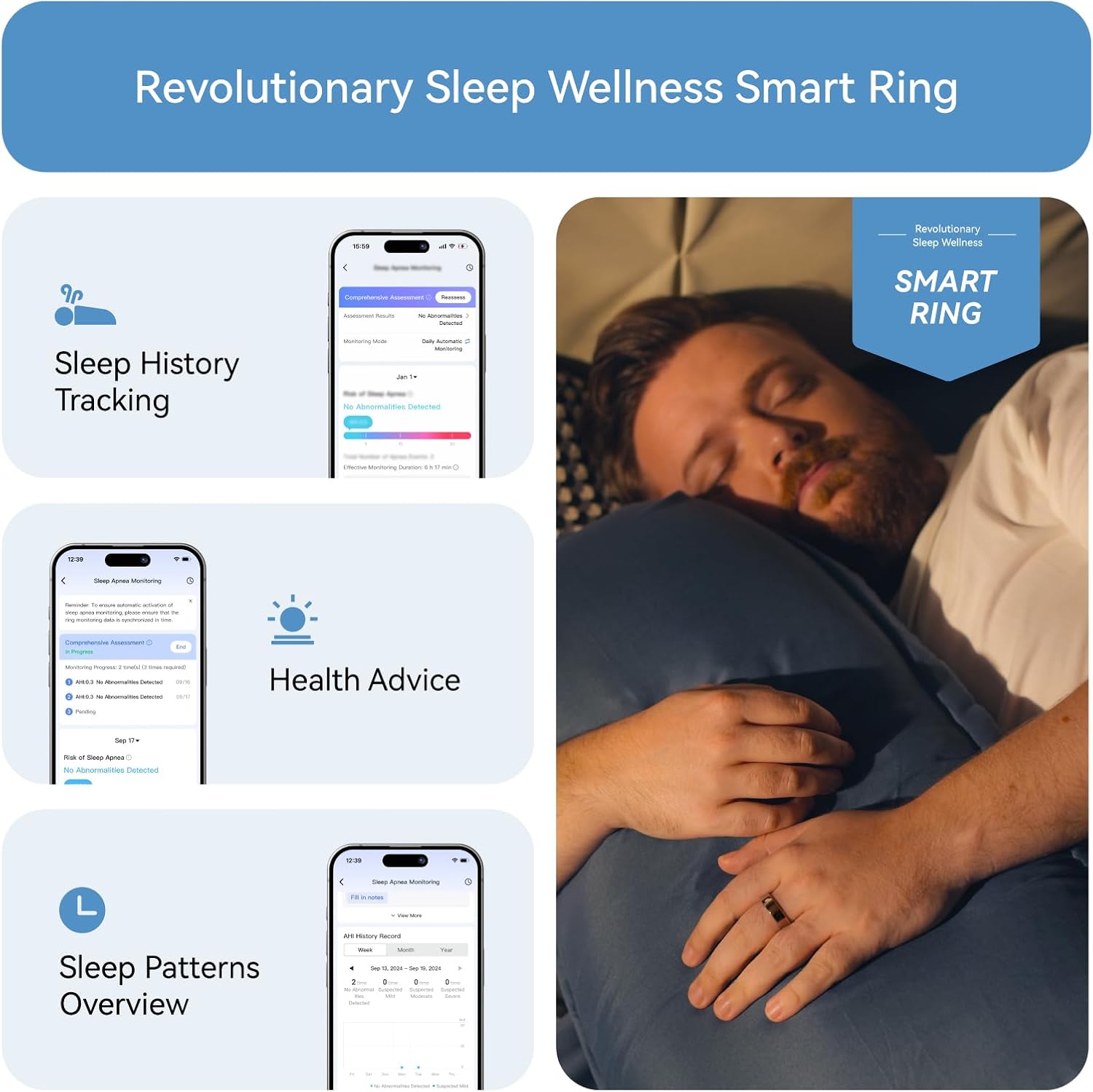
People search sleep accuracy because they see one weird night and lose trust. The healthier approach is to treat sleep data as a trend tool, then reduce the common noise sources. For a broader look at what RingConn data you can rely on, see our RingConn accuracy guide.
What’s usually useful
- Total sleep time trend over weeks
- Bedtime consistency patterns
- Recovery direction paired with HR/HRV trends
What’s usually misleading
- Treating one night’s deep/REM split as “truth”
- Assuming every wake-up should be detected perfectly
Mini: how sizing affects data accuracy
Smart rings use optical sensors. Those sensors need stable skin contact. When the ring is slightly loose:
- small gaps let ambient light leak in
- the ring rotates, so the sensor reads different spots
- movement changes pressure, which changes the signal
- sleep makes it worse because you roll and flex for hours
Fit is not just comfort, fit is signal quality. Get the right size with the RingConn sizing guide.
Tiny honesty
If you read your sleep charts every morning and feel worse, you may be better off checking weekly. If you’re shopping, here’s our ranked list of the best smart rings for sleep tracking.
What to read next (pick your path)
If you’re deciding what to buy:
If you want cleaner data:
If workouts matter:
Want to see how the RingConn Gen 3 handles sleep specifically? Check the RingConn Gen 3 on Amazon →