White Noise vs Pink Noise for Sleep: Which One Actually Works Better?
Short answer: Pink noise has better research support for improving deep sleep quality. White noise is better at masking disruptive sounds. For most people, pink noise is the better long-term choice — it’s easier on the ears and actively promotes deeper sleep, not just blocks noise.
The technical difference
Both are “noise” — random sound signals. The difference is frequency distribution:
White noise:
- Equal power across all frequencies (20 Hz to 20,000 Hz)
- Sounds like: TV static, fan, hissing air
- Spectral shape: flat line across frequencies
- Perceived as: bright, sharp, somewhat harsh
Pink noise:
- Power decreases as frequency increases (lower frequencies louder)
- Sounds like: steady rainfall, rustling leaves, distant waterfall
- Spectral shape: drops 3 dB per octave
- Perceived as: softer, deeper, more natural
In practice: White noise sounds “brighter” because human ears are more sensitive to high frequencies. Pink noise sounds “fuller” because it emphasizes the bass/mid tones our ears find soothing.
What the research actually shows
Pink noise and deep sleep
Key study (Northwestern University, 2017): Adults who slept with pink noise timed to their brain’s slow oscillations increased deep sleep time by 10-20% and performed better on memory tests the next morning.
Mechanism: Pink noise may entrain brain waves into the delta frequency range (0.5-4 Hz) associated with deep sleep. The low-frequency pattern “guides” the brain into staying in slow-wave sleep longer.
Replicated: Multiple smaller studies found similar results — pink noise during sleep correlates with:
- Increased deep sleep percentage
- Better memory consolidation
- More stable sleep (fewer micro-awakenings)
White noise and masking
Key finding: White noise is more effective at masking sudden high-frequency sounds (voices, clanging, alarms) because it contains more high-frequency energy.
Trade-off: White noise played all night at high volume can itself be disruptive to some sleepers due to its brightness. It’s better than unpredictable traffic noise, but not necessarily better than silence for everyone.
Direct comparison
A 2021 meta-analysis of sound conditioning for sleep found:
- Pink noise: improves sleep quality and deep sleep architecture
- White noise: improves ability to fall asleep in noisy environments
- Both: reduce number of nighttime awakenings
When to use white noise vs pink noise
| Scenario | Best choice | Why |
|---|---|---|
| Quiet bedroom, want deeper sleep | Pink noise | Actively promotes slow-wave sleep |
| Noisy neighbors, street traffic | White noise | Better high-frequency masking |
| Snoring partner | White noise first, pink if tolerable | Snoring is mid-to-high frequency |
| Baby nursery | Pink noise | Softer, less harsh on developing ears |
| Tinnitus management | White noise | Broader spectrum covers ringing |
| Office/study noise masking | White noise | Masks voices and keyboard clicks |
| Long-term nightly use | Pink noise | Less fatiguing, more natural |
Brown noise (bonus third option)
Brown noise (Brownian noise) drops even faster than pink — it’s almost all low bass frequencies.
- Sounds like: deep rumble, distant thunder, low ocean waves
- Good for: people who find white AND pink too bright
- Research: limited compared to pink, but anecdotally popular
How to test which works for you
Subjective preference matters, but objective sleep data matters more.
Protocol:
- Baseline week (7 nights): Sleep without any noise, track with a smart ring
- Pink noise week (7 nights): Play pink noise at 40-50 dB all night
- White noise week (7 nights): Play white noise at 40-50 dB all night
- Compare: Which week had the highest deep sleep %? Fewest awakenings?
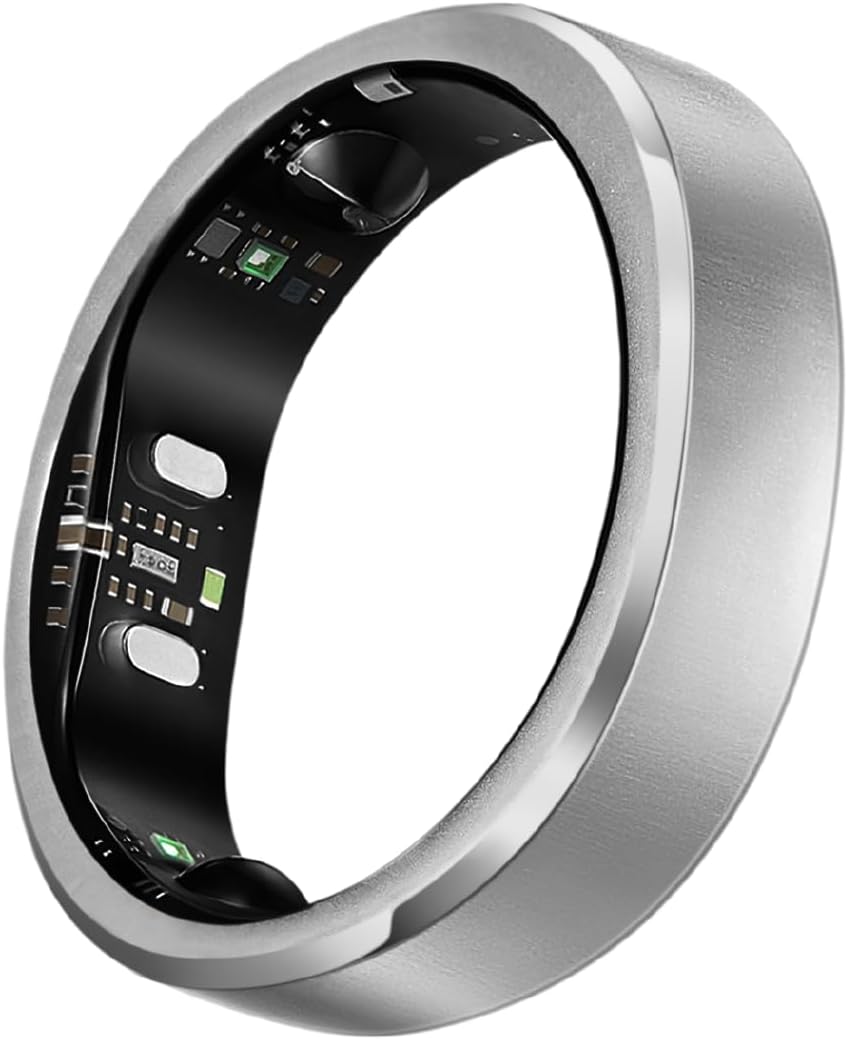
Smart rings for tracking: RingConn Gen 3 and Oura Ring 5 measure deep sleep percentage, sleep efficiency, and restlessness. You’re looking for 5-10% improvements in deep sleep or fewer disruptions.
Volume matters as much as color
Too loud (over 60 dB): Disrupts sleep architecture itself
Too quiet (under 30 dB): Doesn’t mask disruptive sounds
Sweet spot (40-50 dB): Masks moderate external noise without becoming a stressor
Use a free smartphone sound meter app to check your volume. 40 dB is roughly the volume of a quiet library or light rainfall.
Realistic expectations
Pink or white noise won’t:
- Fix sleep apnea
- Overcome terrible sleep hygiene (screens before bed, alcohol, inconsistent schedule)
- Add more than 10-20% to your deep sleep time
It will:
- Mask unpredictable environmental sounds
- Provide consistent auditory background (your brain stops “listening”)
- For pink noise specifically, potentially entrain deeper slow-wave sleep
Think of it as a 5-15% improvement factor, not a magic fix.
The bottom line
For most people, pink noise wins:
- More pleasant long-term
- Research-backed deep sleep benefits
- Adequate masking for moderate noise environments
White noise is better if:
- You live in a very loud environment (urban street, thin walls)
- You specifically need high-frequency masking (voices, sharp sounds)
- You already tried pink and it didn’t work for you
Use a smart ring to measure objectively. Your “I feel more rested” might align with the data, or you might discover the noise you hate subjectively gives you 20% more deep sleep. Track first, decide second.