Low Breathing Rate While Sleeping: Is 8-12 BPM Normal? Causes & Risks
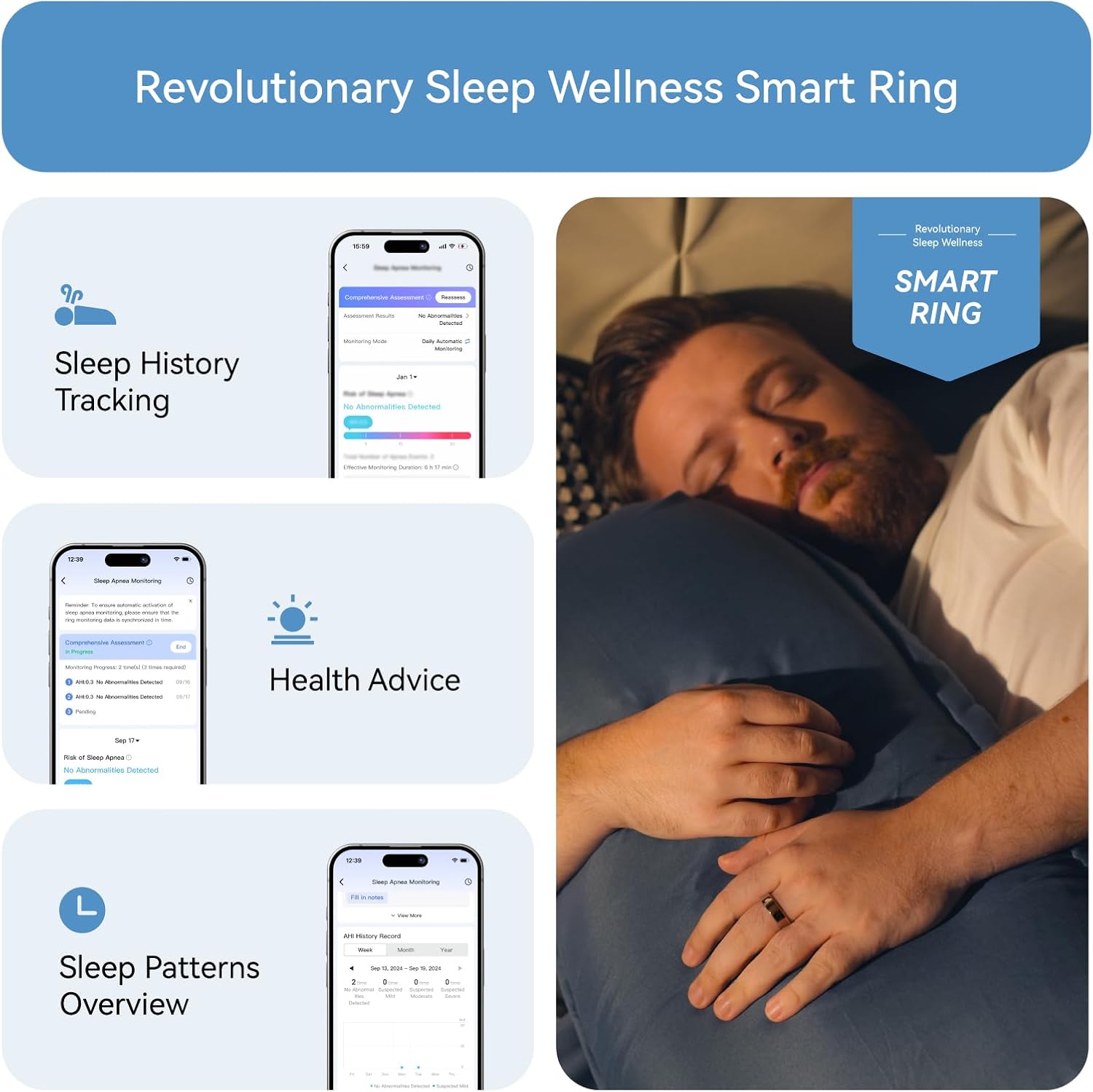
Short answer: A breathing rate of 12-20 breaths per minute during sleep is normal for adults. Under 12 BPM can be perfectly healthy (especially in athletes) or a red flag (especially with sleep apnea symptoms). Context matters more than the number alone.
Normal breathing rate ranges during sleep
| Age group | Normal range (breaths per minute) | Notes |
|---|---|---|
| Adults (18-65) | 12-20 | Most people average 14-18 |
| Well-trained athletes | 8-12 | Lower due to efficient oxygen use |
| Older adults (65+) | 12-18 | Slightly faster than younger adults |
| Children (6-12) | 18-30 | Higher metabolic rate |
| Infants (0-1 year) | 30-60 | Much faster, highly variable |
Your breathing naturally slows during deep sleep (N3 stage) and becomes more regular. During REM sleep, it speeds up slightly and becomes more irregular as your brain activity increases.
What causes low breathing rate while sleeping?
1. High cardiovascular fitness
Athletes and regular exercisers develop more efficient oxygen extraction. Their lungs and heart don’t need to work as hard to deliver the same oxygen to tissues, so breathing rate drops.
Indicator this is healthy: low resting heart rate (under 60 BPM), good HRV, high VO2 max, no symptoms.
2. Deep sleep dominance
During N3 (deep sleep), breathing rate naturally drops by 2-5 breaths per minute compared to lighter sleep stages. People who spend more time in deep sleep often show lower average overnight breathing rates.
Indicator this is healthy: high sleep efficiency, 15-25% deep sleep, waking refreshed.
3. Obstructive sleep apnea (paradoxical)
During apnea episodes, breathing stops completely (0 BPM). Between episodes, the body often compensates with slower, deeper breaths. Some sleep apnea patients show lower average breathing rates punctuated by gasping.
Indicator this is problematic: SpO2 dips, morning headaches, daytime fatigue, loud snoring, waking gasping.
4. Central sleep apnea
The brain temporarily fails to signal the breathing muscles. Unlike obstructive apnea (mechanical blockage), this is a neurological issue. Breathing rate averages can appear low.
Indicator this is problematic: breathing pauses witnessed by partner, waking with shortness of breath, no snoring (unlike obstructive apnea).
5. Medications
Opioids, benzodiazepines, muscle relaxants, and some sleep aids suppress respiratory drive. If you started a new medication and your overnight breathing rate dropped, that’s the likely cause.
Red flag: If taking opioids and breathing rate drops below 10 BPM consistently, discuss with your doctor immediately.
6. Hypothyroidism
Low thyroid hormone slows metabolism, including respiration. Untreated hypothyroidism can cause breathing rates in the low end of normal or below.
Other signs: weight gain, cold sensitivity, fatigue, dry skin.
How smart rings measure breathing rate during sleep
Smart rings don’t have airflow sensors (that would require a nose/mouth device). Instead, they infer breathing rate from two signals:
- Accelerometer micro-movements — your chest/abdomen rises and falls with each breath, transmitting subtle motion to your hand
- Heart rate variability patterns — breathing modulates heart rate (respiratory sinus arrhythmia). Your heart speeds up slightly on inhale, slows on exhale
By analyzing these patterns, rings like RingConn Gen 3 and Oura Ring 5 calculate average overnight breathing rate with reasonable accuracy (±1-2 BPM vs. clinical measurement).
Smart ring comparison for breathing rate tracking
| Feature | RingConn Gen 3 | Oura Ring 5 | Ultrahuman Ring Air |
|---|---|---|---|
| Breathing rate tracking | Yes | Yes | No |
| Average overnight rate | Yes | Yes | — |
| Breath-by-breath detail | No | No | — |
| Deviation alerts | Yes | Yes | — |
| Integration with SpO2 | Yes | Yes | Yes (but no BR) |
| Subscription | None | $6/month | None |
For breathing rate monitoring specifically, RingConn Gen 3 and Oura Ring 5 are your options among major smart rings. Ultrahuman doesn’t track respiratory rate.
When low breathing rate is healthy vs. concerning
| Scenario | Breathing rate | Other data | Assessment |
|---|---|---|---|
| Fit athlete, 10 BPM sleep average | Low | Resting HR 48, HRV high, SpO2 98%+ | Healthy |
| Average adult, 9 BPM sleep average | Low | Resting HR 70, HRV average, SpO2 97%+ | Likely fine — deep sleeper |
| 11 BPM + SpO2 dips to 88% | Low | Morning headaches, snoring | Sleep apnea — see doctor |
| 8 BPM on new sleep medication | Low | No symptoms, recent Rx change | Medication effect — monitor |
| 7 BPM + waking gasping | Very low | Partner reports breathing pauses | Emergency — call doctor |
The pattern matters more than one number. If your ring shows low breathing rate but you wake refreshed, have good SpO2, and no symptoms, you’re likely a deep sleeper or fit. If low BR comes with oxygen dips, poor sleep quality, or daytime impairment, that’s a red flag.
What to do if your smart ring shows low breathing rate
If 8-12 BPM with no symptoms:
- Track for 2 weeks to establish your baseline
- Check your sleep quality scores — is deep sleep high?
- Look at SpO2 trends — any dips below 94%?
- Note resting heart rate and HRV — are they healthy?
If under 8 BPM or with concerning symptoms:
- Bring your ring data to your doctor
- Request a sleep study if you have apnea symptoms
- Review medications — anything sedating or opioid-based?
- Get thyroid function tested (TSH, free T4)
If taking opioids or sedatives:
- Never ignore low breathing rate on these medications
- Show your doctor your overnight breathing data immediately
- Consider a pulse oximeter for continuous overnight SpO2 monitoring
The value of continuous tracking
A single breathing rate reading at the doctor’s office tells you almost nothing about sleep respiration. Your overnight pattern — how stable it is, whether it dips during certain sleep stages, how it correlates with SpO2 — tells the whole story.
Smart rings give you this pattern data passively every night. Over weeks, you can see:
- Your personal baseline (some people are just 11 BPM sleepers)
- Night-to-night variability (high variability may indicate disrupted sleep)
- Correlation with sleep quality (does low BR happen on your best sleep nights?)
- Trend changes (suddenly dropping from 15 BPM to 10 BPM over a month warrants investigation)
The bottom line
Low breathing rate during sleep is often normal and even desirable (sign of deep, efficient sleep). It’s concerning when paired with oxygen desaturation, morning symptoms, or medication use that suppresses respiration.
Smart rings that track breathing rate give you weeks of overnight data showing patterns a single doctor visit can’t capture. Use that data to have informed conversations with your doctor, not to self-diagnose.