Can a Smart Ring Detect Sleep Apnea? What Actually Works (2026)
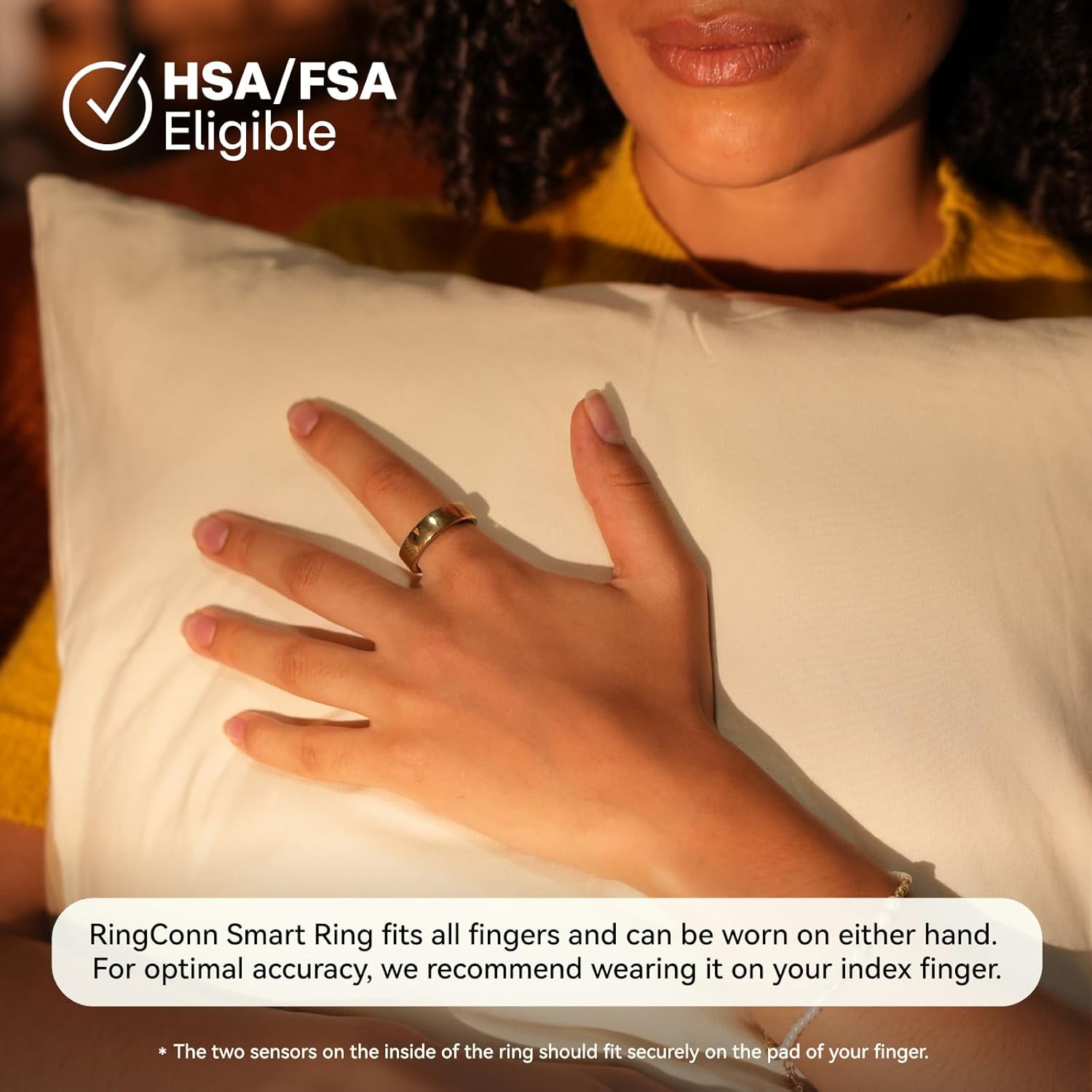
Short answer: No smart ring can diagnose sleep apnea. But several rings track overnight SpO2, breathing rate, and HRV patterns that correlate with apnea events — giving you data that might prompt a proper sleep study.
Think of a smart ring as a smoke detector, not a firefighter. It flags something might be wrong. A doctor confirms what’s actually happening.
What sleep apnea looks like in ring data
Sleep apnea causes repeated breathing interruptions during sleep. Each pause triggers a cascade of measurable effects:
- SpO2 drops — oxygen saturation dips as breathing stops, then spikes back up when you gasp
- Heart rate spikes — your heart rate jumps to compensate for low oxygen
- HRV disruption — the stress response crushes heart rate variability
- Fragmented sleep stages — you never reach sustained deep sleep
- Elevated breathing rate — your body compensates between episodes
A smart ring won’t show you individual apnea events (it samples too slowly for that), but it shows the cumulative overnight pattern: repeated SpO2 dips, low HRV, poor deep sleep, and elevated resting heart rate.
Smart ring metrics relevant to sleep apnea
| Metric | What it reveals | Apnea red flag |
|---|---|---|
| SpO2 (blood oxygen) | Overnight oxygen levels | Frequent dips below 94%, any dip below 90% |
| Breathing rate | Respiratory patterns during sleep | Unusually high average (>20 breaths/min) |
| HRV | Autonomic nervous system stress | Consistently low, no overnight recovery |
| Resting heart rate | Cardiovascular strain | Elevated vs. your baseline |
| Deep sleep % | Sleep architecture quality | Under 10% of total sleep |
| Blood pressure trends | Vascular stress | Elevated overnight readings |
Ring-by-ring comparison for sleep apnea monitoring
RingConn Gen 3
Relevant sensors: SpO2, breathing rate, HRV, skin temperature, blood pressure trends
RingConn Gen 3 offers the widest sensor suite for apnea-related metrics. It tracks continuous overnight SpO2 and breathing rate, and it’s the only consumer smart ring with blood pressure trend monitoring — relevant because sleep apnea often causes nocturnal hypertension.
Strengths:
- No subscription — all data accessible forever
- Blood pressure trends (unique among rings)
- 7-day battery means uninterrupted nightly tracking
- SpO2 + breathing rate + HRV in one device
Limitations:
- No explicit “sleep apnea risk” score or alert
- SpO2 sampling rate not published (likely every few minutes, not continuous)
- Blood pressure is trend-only, not absolute values
Oura Ring 5
Relevant sensors: SpO2, breathing rate, HRV, skin temperature
Oura has the most mature sleep staging algorithm and the longest track record in sleep research partnerships. Its Readiness Score incorporates overnight HRV and respiratory rate changes that reflect sleep quality degradation.
Strengths:
- Best-in-class sleep staging accuracy
- Blood oxygen sensing (SpO2) with overnight graph
- Respiratory rate trend tracking
- Large research dataset backing its algorithms
Limitations:
- Requires $6/month subscription for full SpO2 data
- No blood pressure monitoring
- No dedicated apnea detection feature
Ultrahuman Ring Air
Relevant sensors: SpO2, HRV, skin temperature
Ultrahuman focuses on metabolic health and recovery scoring. It tracks SpO2 and HRV but doesn’t emphasize respiratory metrics as strongly.
Strengths:
- No subscription
- Good HRV tracking
- Sleep quality scoring
Limitations:
- No breathing rate metric
- No blood pressure
- Less sleep-focused than RingConn or Oura
Comparison table
| Feature | RingConn Gen 3 | Oura Ring 5 | Ultrahuman Ring Air |
|---|---|---|---|
| SpO2 tracking | Yes | Yes | Yes |
| Breathing rate | Yes | Yes | No |
| HRV overnight | Yes | Yes | Yes |
| Blood pressure trends | Yes | No | No |
| Sleep staging | Basic | Advanced | Basic |
| Apnea-specific alert | No | No | No |
| Subscription | None ($349) | $6/month | None ($349) |
| Battery life | 7 days | 5-7 days | 6 days |
Our take: For sleep apnea screening specifically, RingConn Gen 3 offers the best combination of relevant sensors without ongoing costs. If sleep staging accuracy matters more to you, Oura is stronger there — but you’ll pay for it monthly.
When to actually see a doctor
A smart ring can show patterns. It cannot tell you “you have sleep apnea.” See a doctor if your ring data consistently shows:
- SpO2 dipping below 94% multiple times per night
- Resting heart rate elevated 5+ bpm above your normal
- Deep sleep under 10% consistently
- HRV significantly lower on nights you snore (ask your partner)
Combine ring data with symptoms: daytime fatigue despite “enough” sleep hours, morning headaches, waking up gasping, or a partner reporting loud snoring with pauses.
Your doctor will likely order a home sleep test (HST) or in-lab polysomnography — both far more definitive than any wearable.
The bottom line
Smart rings are getting better at health monitoring every year, but none can diagnose sleep apnea. What they can do is give you weeks of overnight data showing patterns that a single-night sleep study might miss.
The best use case: wear a ring for 2-3 weeks, review your SpO2 and breathing rate trends, and bring that data to your doctor. It’s more useful than saying “I think I might have sleep apnea” — it’s showing your doctor actual overnight oxygen patterns.
For this specific use case, RingConn Gen 3 gives you the most relevant data points (SpO2 + breathing rate + BP trends) at the lowest long-term cost.