RingConn Gen 2 Air Review: Should You Save $100 or Buy Gen 2?
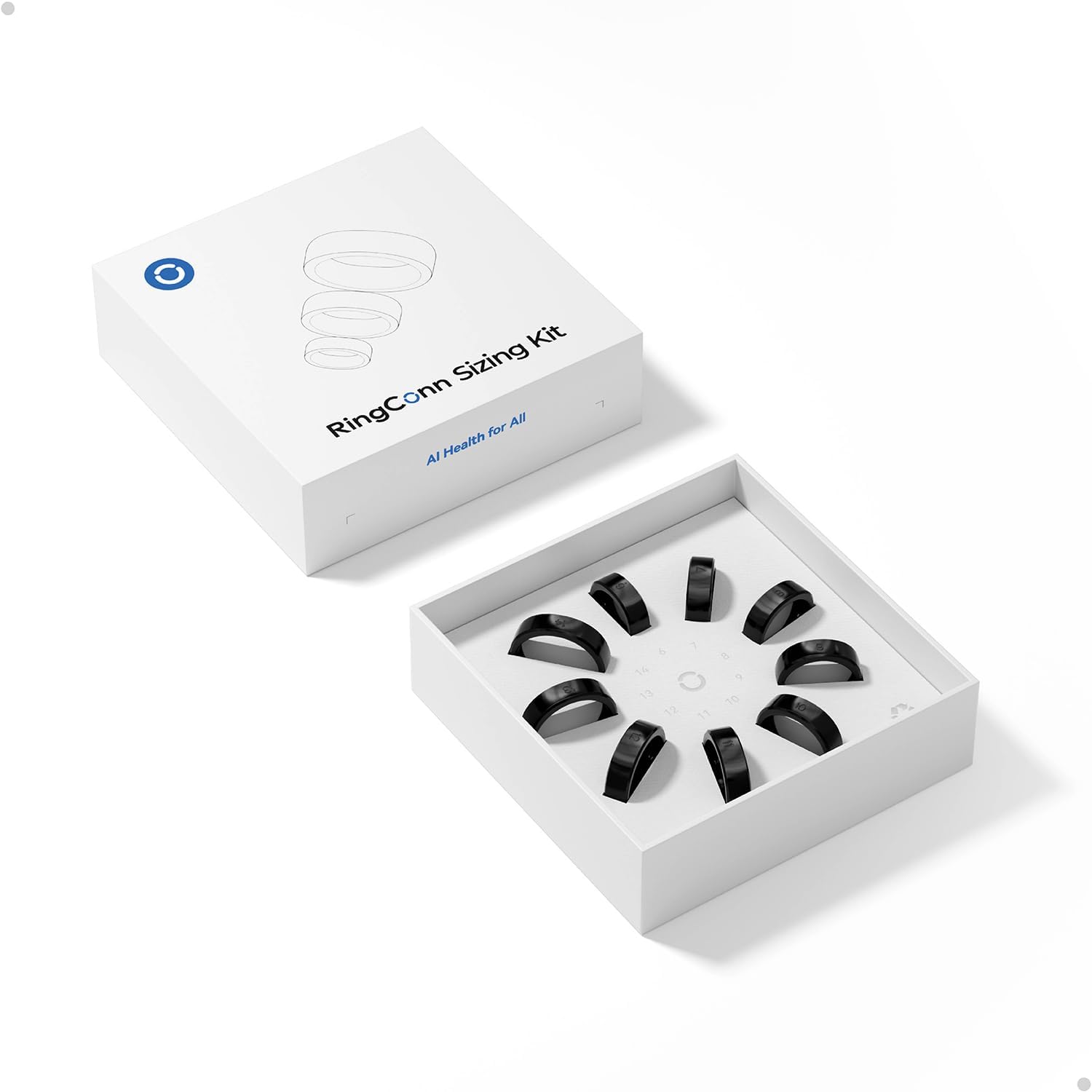
The RingConn Gen 2 Air is worth considering if you want the cheapest RingConn smart ring and you mainly care about sleep, heart rate, HRV, basic activity tracking, and no subscription. It is not the best RingConn for everyone. The full RingConn Gen 2 costs more, but it gets you titanium build, a portable charging case, and sleep apnea monitoring. Gen 2 Air is the “try smart rings without spending too much” option.
That makes the buying question simple: do you want to save about $100 now, or do you want the more complete Gen 2 package?
This is a buyer-oriented review based on RingConn’s current product specs, support answers, and the normal smart ring tradeoffs that show up across sizing, battery, sleep tracking, and workout accuracy. It is not a 30-day lab test.
Quick verdict
Buy RingConn Gen 2 Air if this is your first smart ring, you dislike subscriptions, and you want a lower-risk way to learn whether ring-based health tracking fits your life.
Skip it if you already know you will wear a smart ring every night and you want the better long-term package. In that case, the full RingConn Gen 2 is easier to justify. If you want the newest RingConn features, skip both and compare with RingConn Gen 3.
Specs at a glance
| Spec | RingConn Gen 2 Air |
|---|---|
| Price | $199 from RingConn US store as of July 30, 2026 |
| Subscription | None |
| Battery | Up to 10 days, depending on ring size |
| Charging | Magnetic charging dock, about 90 minutes to full |
| Thickness | 2mm |
| Width | 6.8mm |
| Weight | 2.5-4g, depending on ring size |
| Material | Titanium steel |
| Sizes | Same sizing system as RingConn Gen 2 |
| Water resistance | IP68, listed as 100m / 328ft |
| Sleep apnea monitoring | No |
Sources: RingConn’s Gen 2 Air product page and RingConn’s product comparison page.
What Gen 2 Air is trying to be
Gen 2 Air is not positioned as the most powerful RingConn. It is the entry model.
That matters because a lot of smart ring disappointment comes from overbuying or underbuying. If you are only curious about smart rings, spending $349 on a flagship ring can feel silly. If you already know you care about nightly data, recovery trends, and travel-friendly charging, buying the cheapest version can become the wrong kind of savings.
Gen 2 Air sits in the middle emotionally: cheap enough to try, real enough to use, but not the model I would buy if I wanted the most complete RingConn experience.
RingConn Gen 2 Air vs Gen 2
This is the most important comparison. The Air exists because the full Gen 2 leaves room underneath it.
| Category | Gen 2 Air | Gen 2 |
|---|---|---|
| Price | $199 | $299 |
| Material | Titanium steel | Titanium |
| Battery | Up to 10 days | Up to 12 days |
| Charging accessory | Charging dock | Charging case |
| Sleep apnea monitoring | No | Yes |
| Sizing | Same Gen 2 sizing system | Same Gen 2 sizing system |
| Best for | Entry-level buyers | Better long-term value |
The $100 difference is not just branding. You are giving up some convenience and at least one meaningful health feature.
The charging difference is easy to underestimate. Gen 2 Air includes a charging dock. The full Gen 2 includes a charging case designed for the ring size, which is more convenient if you travel or charge away from your desk. If your ring routine will be “put it on a dock every week near my bed,” Air is fine. If you want a portable battery-style case, Gen 2 is cleaner.
Sleep apnea monitoring is the other line. RingConn’s own FAQ says Gen 2 Air covers key health tracking features, but does not include sleep apnea monitoring. If that feature is one reason you are looking at RingConn instead of a cheaper generic ring, do not buy the Air.
What it tracks well
Gen 2 Air is still a useful wellness tracker if your expectations are sane.
Sleep duration and sleep rhythm:
The strongest use case is seeing when you sleep, how consistent your bedtime is, and whether your routine is drifting. Smart rings are good at passive sleep tracking because they are easier to wear overnight than a watch.
Resting heart rate and HRV trends:
These are useful as trend signals. A single bad HRV night is not a crisis. A multi-week pattern is more interesting. That is the kind of reading smart rings are built for.
Basic recovery and stress patterns:
The app can help you notice when sleep, stress, and recovery are moving together. The value is not that it tells you exactly what to do every morning. The value is that it makes patterns harder to ignore.
Cycle insights:
RingConn describes Gen 2 Air as using temperature trends and cycle history for cycle predictions. Treat that as a wellness feature, not medical certainty.
What it does not solve
The Air is still a smart ring. That means it has the usual category limits.
It is not a workout heart-rate device.
Rings use optical sensors, and movement makes optical readings messy. Grip pressure, sweat, ring rotation, and rapid heart-rate changes all make workout data noisier. If training accuracy matters, use a chest strap or sports watch.
It is not a medical device.
Sleep staging, stress scores, HRV, and temperature trends can be useful, but they are not diagnosis. If you are worried about sleep apnea, arrhythmia, blood pressure, or another health condition, use medical tools and talk to a clinician.
It will not fix bad sizing.
The best smart ring is mediocre when the fit is wrong. A loose ring rotates. A tight ring annoys you at night. Either problem can ruin the habit.
The sizing part matters more than the price
RingConn says Gen 2 and Gen 2 Air use the same ring sizes and sizing kits. That is good because there is less confusion than with Gen 3, which uses a different sizing system.
Still, do not order based on jewelry size. A smart ring has sensors. It needs stable contact with your skin, especially while you sleep.
Use the sizing kit like a real trial:
- Wear the sample ring for at least one full day.
- Sleep with it before choosing.
- Check whether it rotates when your hand is dry.
- Check whether it feels tight when your fingers swell.
- Prefer stable contact over a loose, jewelry-style fit.
If the ring spins at night, your data will look worse than the hardware really is. Our RingConn sizing guide goes deeper on this because sizing is the easiest expensive mistake to avoid.
Battery life and charging
RingConn lists Gen 2 Air at up to 10 days of battery life, with about 90 minutes for a full charge. That is still much better than many smart rings and most smartwatches.
The more practical question is not “Can it reach 10 days?” It is “Will I build a charging habit that keeps it alive?”
Gen 2 Air uses a dock, which is fine at home. The full Gen 2’s charging case is nicer for travel because you can carry the case and charge without thinking as much about cables and desks. This is a small detail in a spec table, but it becomes a real-life detail after a few months.
If you rarely travel and keep one charging spot by your bed, Air is enough. If you travel often, Gen 2 is the safer pick.
Comfort and build
The Air’s strongest argument is comfort. RingConn describes it as 2mm slim and as light as 2.5g, with weight ranging from 2.5g to 4g depending on ring size. That is the kind of spec that actually matters, because a smart ring only works if you keep wearing it.
The material difference is worth noting. Gen 2 Air uses titanium steel, while Gen 2 uses titanium. That does not automatically make the Air bad, but it does mean it is not simply “the same ring for less money.” The lower price comes from a different package.
For most people, the bigger day-to-day issue will be not material but tolerance. If you hate wearing rings, no spec sheet will save the purchase. If you already wear a ring comfortably, the Air’s thin profile makes sense.
Who should buy RingConn Gen 2 Air
Gen 2 Air is a good fit if:
- You want a no-subscription smart ring under $200.
- You are trying smart rings for the first time.
- You mostly care about sleep and recovery trends.
- You do not need sleep apnea monitoring.
- You charge devices in predictable places.
- You want a thinner, lighter ring more than the most complete feature set.
This is the “I want to test the category without getting trapped in a monthly fee” buyer.
Who should skip it
Skip Gen 2 Air if:
- You want the best RingConn value over two or three years.
- You want sleep apnea monitoring.
- You travel often and want the charging case.
- You are comparing it mainly because it is cheap, but you already know you will use the ring daily.
- You expect live workout feedback or precise exercise heart rate.
If you are already convinced by smart rings, the full Gen 2 is probably the cleaner buy. If you want vibration alerts or newer health-trend features, look at Gen 3 instead.
Price and value
At $199, Gen 2 Air is interesting because it competes less with Oura and more with hesitation.
The real competitor is the voice in your head saying, “What if I buy a smart ring and stop wearing it after two weeks?” For that buyer, Air makes sense. You get a credible brand, no subscription, and enough tracking to understand whether ring-based wellness data is useful to you.
But if you are choosing between Air and Gen 2 only because of the $100 difference, be honest about how long you expect to keep it. Over two years, that $100 is about $4.17 per month. If the charging case and sleep apnea monitoring matter to you, the upgrade is not expensive in monthly terms.
Where to buy
Check RingConn’s official Gen 2 Air product page for current price, sizes, and availability.
You can also check the Amazon listing used by this site: RingConn Gen 2 Air on Amazon.
Bottom line
RingConn Gen 2 Air is not the best RingConn ring. It is the cheapest sensible RingConn ring.
That is enough if your goal is to try smart rings without a subscription and without spending flagship money. It is not enough if you want the most complete RingConn experience or if sleep apnea monitoring and portable charging matter.
My simple recommendation: buy Gen 2 Air if price is the deciding factor. Buy Gen 2 if you want better long-term value. Buy Gen 3 if you want the newest RingConn features.