RingConn Gen 2 Review (2026): Still Worth Buying?
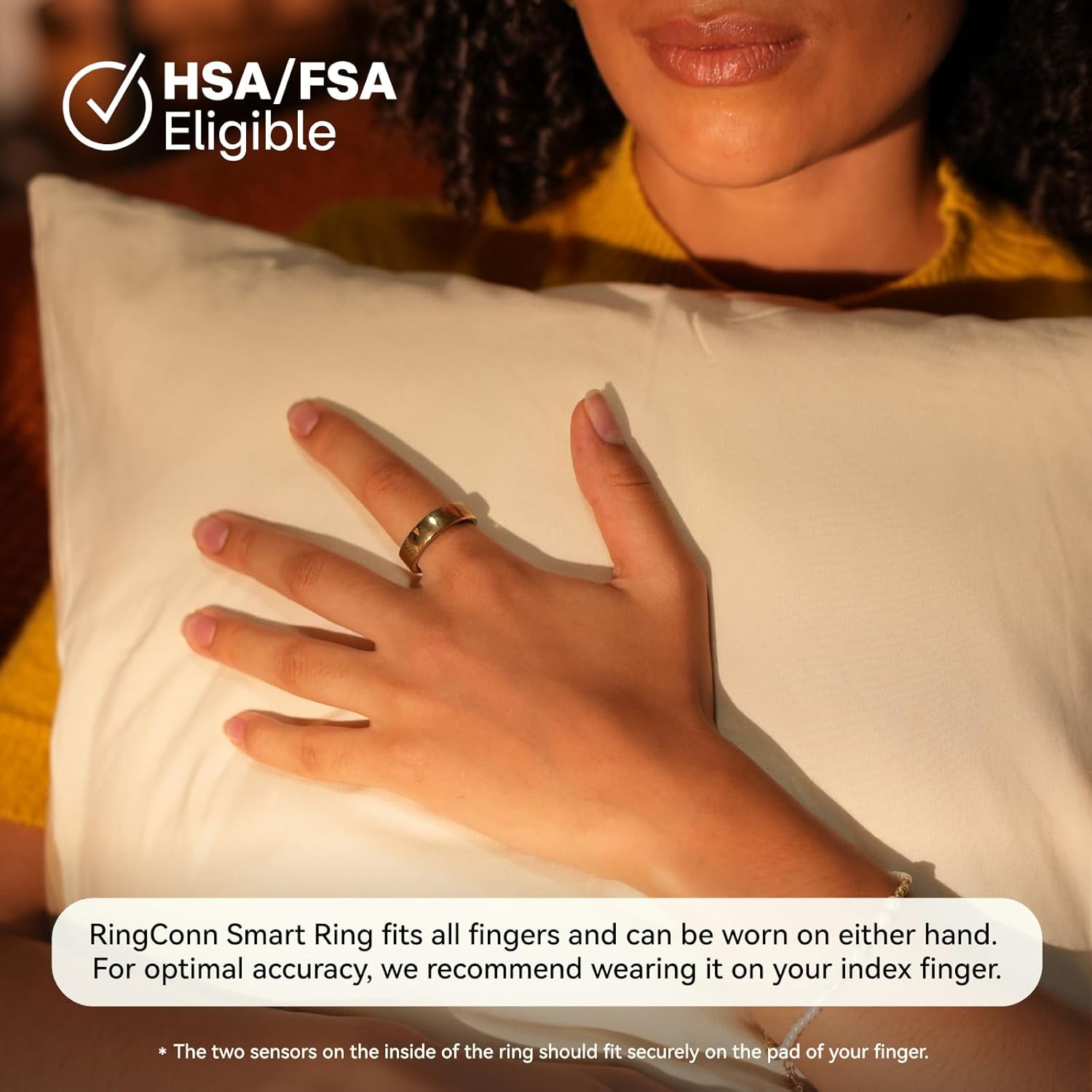
This is a buyer-oriented review. It doesn’t pretend there is a perfect smart ring.
The goal is to help you predict: “Will I still wear this in 30 days?”
Specs at a glance
| Spec | RingConn Gen 2 |
|---|---|
| Price | $299 |
| Battery (claimed) | 12 days |
| Battery (real-world) | 10-11 days |
| Weight | 2-3g |
| Material | Titanium |
| Sizes | 6-14 |
| Colors | 4 options |
| Subscription | None |
| Water resistance | 5ATM (swimming) |
What it’s good for
Sleep and recovery trend tracking: RingConn tracks sleep duration, stages (light/deep/REM), HRV during sleep, and nighttime temperature. The data is useful for seeing patterns over weeks. For details on what’s accurate, read our sleep tracking accuracy breakdown.
No subscription: You pay once, you get all features forever. This is the main differentiator from Oura ($5.99/month required). Over 2 years, Oura costs ~$493 vs RingConn Gen 2 at $299.
Comfort: RingConn rings are lightweight (2-3g) and designed for 24/7 wear. The titanium build is durable and doesn’t feel bulky on your finger. Many users report forgetting they’re wearing it.
Battery life: 10-12 days is significantly longer than Oura (3-4 days) and Samsung Galaxy Ring (4-6 days). For travelers, this means less charging anxiety.
What it’s bad for (and people get mad about)
Workout performance tracking: Optical sensors struggle during movement. This is true for all smart rings, all smartwatches. RingConn is not a workout tracking device.
If workout HR accuracy matters, get a chest strap (Polar H10, Garmin HRM-Pro). RingConn won’t give you reliable exercise heart rate. We explain why all rings struggle during workouts.
Medical-grade sleep staging: Smart rings estimate sleep stages based on movement and HRV. They’re not EEG devices. The staging is useful for trends, not clinical accuracy.
If you need clinical sleep data, see a sleep specialist. RingConn is a wellness device, not a medical device.
People who hate wearing rings during sleep: If you can’t tolerate a ring on your finger while sleeping, RingConn won’t work for you. Sleep tracking requires nighttime wear.
How sizing affects data accuracy
Smart rings use optical sensors. Those sensors need stable skin contact.
When the ring is slightly loose:
- Small gaps let ambient light leak in
- The ring rotates, so the sensor reads different spots
- Movement changes pressure, which changes the signal
- Sleep makes it worse because you roll and flex for hours
Fit is not just comfort. Fit is signal quality.
A slightly loose ring causes:
- Inconsistent HRV readings
- Missing sleep data segments
- Erratic readiness scores
A slightly tight ring causes:
- Discomfort during sleep
- Skin irritation
- Finger swelling in hot weather
Solution: Always order the free sizing kit. Wear the sizing rings for 24-48 hours during normal activity and sleep. Our sizing guide covers the full process.
Real-life friction (small annoyances that decide retention)
Sizing mistakes: The #1 cause of returns. Users guess their size based on jewelry rings, then discover the ring doesn’t fit properly for sensor accuracy.
Sync lag: RingConn syncs when you open the app. It’s not live like a smartwatch. Users expecting instant updates feel “something is broken.” If you’re experiencing this, check our syncing troubleshooting guide.
Early readiness frustration: Readiness scores need a baseline. The first 1-2 weeks of data are less meaningful. Users who check daily without baseline get frustrated.
App simplicity: RingConn’s app is functional but less polished than Oura. Some users find it “too basic.” Others appreciate the lack of overwhelming features.
Expectation calibration (who gets disappointed)
Smart rings work best as passive trend trackers, not active training devices.
People usually regret buying a ring when they expect:
- Live workout HR like a watch
- Perfect sleep stage accuracy
- Instant readiness magic without baseline time
If those expectations describe you, you’ll be happier with a smartwatch (and possibly a chest strap).
Who should buy RingConn Gen 2
Buy if:
- You want sleep and recovery tracking without subscription
- You prioritize comfort and long wear time
- You travel often and hate charging anxiety
- You’re budget-conscious ($299 vs $349 for Gen 3)
- You don’t need vibration alerts or blood pressure trends
Skip if:
- You mainly want workout performance tracking
- You need medical-grade sleep staging
- You can’t tolerate wearing a ring during sleep
- You want the most polished app experience (Oura is better)
- You’re curious about Gen 3’s new features
RingConn Gen 2 vs Gen 3
Gen 3 adds:
- Vibration alerts (health alerts, low battery, finger alarm)
- Blood pressure trend monitoring (nighttime only)
- Longer battery (17 days vs 10-12 days)
- More sizes (6-15 vs 6-14)
Gen 2 is still good if:
- You don’t need vibration or BP trends
- Battery life of 10-12 days is acceptable
- You want to save $50-85
See RingConn Gen 3 vs Gen 2 for detailed comparison.
Where to buy
RingConn on Amazon: Check current price and availability
FAQ
Q: Does RingConn Gen 2 require a subscription? A: No. RingConn has no subscription for any model. You pay once and get all features forever.
Q: How long does RingConn Gen 2 battery last? A: Real-world testing shows 10-12 days. RingConn claims 12 days.
Q: Is RingConn Gen 2 good for workout tracking? A: No. Optical sensors struggle during movement. Use a chest strap for workout HR accuracy.
Q: Can I use my jewelry ring size for RingConn? A: No. Smart rings fit differently. Always order the free sizing kit.
Q: Is RingConn Gen 2 still worth buying in 2026? A: Yes, if you don’t need Gen 3’s vibration alerts or blood pressure trends. Gen 2 is $50-85 cheaper and does the core job well.