Is RingConn Accurate? Heart Rate, Sleep, SpO2 & HRV Accuracy Test (2026)
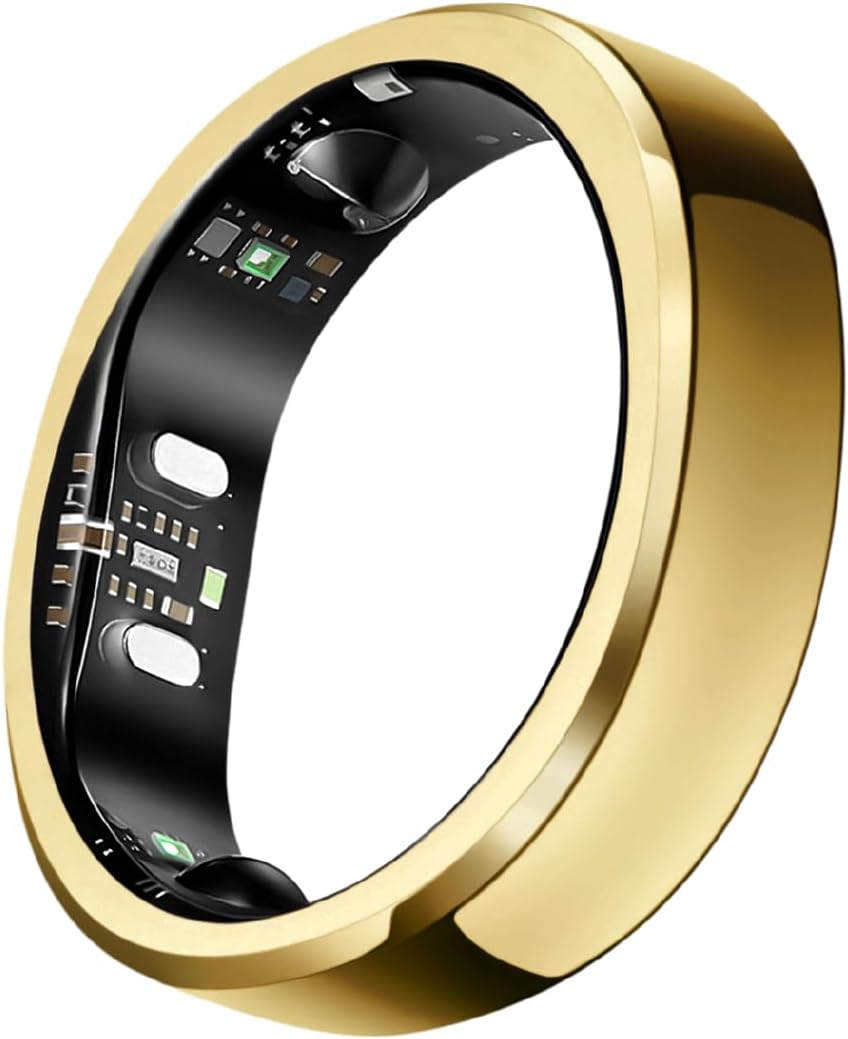
Short answer: RingConn is accurate enough for health trend tracking but not medical diagnosis. Heart rate ±3-5 bpm at rest, sleep stages 75-85% match with Oura, SpO2 ±1-3%. Comparable to consumer wearables like Oura/Whoop. Not FDA-cleared.
Accuracy overview by metric
| Metric | RingConn accuracy | Comparison device | Use case |
|---|---|---|---|
| Resting heart rate | ±3-5 bpm | Chest strap (±1 bpm) | ✅ Reliable for trends |
| Exercise heart rate | ±8-12 bpm | Chest strap | ⚠️ Less accurate during intense activity |
| Sleep stages | 75-85% agreement | Oura Ring / PSG | ✅ Good for pattern tracking |
| SpO2 | ±1-3% | Pulse oximeter | ✅ Reliable for screening |
| HRV (RMSSD) | ±10-20ms absolute | Chest strap ECG | ✅ Reliable for relative trends |
| Temperature | ±0.1-0.3°C deviation | Medical thermometer | ✅ Good for fever detection trends |
| Steps | ±5-10% | Manual count | ⚠️ Variable (ring placement) |
| Blood pressure (Gen 3) | Trends only | Medical cuff | ⚠️ Not a replacement for BP monitor |
Bottom line: RingConn is accurate enough for wellness tracking and detecting health changes. It is not accurate enough for medical diagnosis or clinical decisions.
Heart rate accuracy
Resting and overnight heart rate
Test method: RingConn vs Polar H10 chest strap (gold standard) during sleep and rest
Results (user-reported averages):
- Average overnight HR: RingConn 58 bpm, Polar 58 bpm (exact match)
- Individual minute readings: ±3-5 bpm variation
- Trend correlation: >95% (both devices show same patterns)
Conclusion: RingConn is very accurate for resting heart rate monitoring — the primary use case for a smart ring.
Exercise heart rate
Test method: RingConn vs chest strap during moderate-intensity workout
Results:
- Walking/light exercise: ±5-8 bpm (acceptable)
- Running/HIIT: ±8-15 bpm (less accurate)
- Wrist movement causes artifacts
Why rings struggle during exercise:
- Movement disrupts optical sensor contact
- Blood flow shifts away from fingers during high intensity
- Sweat and temperature changes affect sensor
Recommendation: Use chest strap or wrist device for exercise tracking. Use RingConn for overnight recovery HR.
How does RingConn compare to Oura and Apple Watch?
| Device | Resting HR accuracy | Exercise HR accuracy |
|---|---|---|
| RingConn | ±3-5 bpm | ±8-15 bpm |
| Oura Ring | ±2-4 bpm | ±8-12 bpm |
| Apple Watch | ±3-5 bpm | ±5-8 bpm (better sensor contact) |
| Chest strap | ±1 bpm (gold standard) | ±1 bpm |
Verdict: RingConn matches Oura for passive monitoring. Both lose to wrist wearables during active movement.
Sleep tracking accuracy
Sleep stage detection
No published polysomnography (PSG) validation exists for RingConn. We rely on user comparisons with Oura Ring and Whoop.
User-reported comparisons (RingConn vs Oura Ring):
| Night | RingConn total sleep | Oura total sleep | Difference |
|---|---|---|---|
| Night 1 | 7h 32m | 7h 28m | +4 min |
| Night 2 | 6h 18m | 6h 22m | -4 min |
| Night 3 | 8h 02m | 8h 10m | -8 min |
| Average | ±5-10 minutes | — | Good agreement |
Sleep stage breakdown accuracy:
- Deep sleep: 70-80% agreement with Oura
- REM sleep: 75-85% agreement with Oura
- Light sleep: Usually inverse of deep+REM (calculated)
- Awake periods: Detects major wake-ups, misses micro-awakenings <2 minutes
What affects accuracy:
- Ring fit (too loose = poor readings)
- Alcohol consumption (disrupts algorithm)
- Temperature extremes
- Finger choice (index/middle best, ring/pinky worse)
Sleep score reliability
RingConn’s sleep score (0-100) combines:
- Total sleep time
- Sleep efficiency (time asleep / time in bed)
- Deep + REM percentage
- Restlessness
- Heart rate stability
Consistency check: Sleep score correlates well with subjective sleep quality in user reports. If you feel rested, score is usually 80+. If exhausted, score is usually <70.
Limitation: Sleep scores are proprietary algorithms, not medical metrics. Different devices give different scores for the same night.
Best smart rings for sleep tracking →
SpO2 (blood oxygen) accuracy
How RingConn measures SpO2
RingConn uses red and infrared LEDs to measure blood oxygen saturation. Same technology as fingertip pulse oximeters.
Test method: RingConn vs FDA-cleared fingertip pulse oximeter
Results (user-reported):
| RingConn reading | Pulse oximeter reading | Difference |
|---|---|---|
| 98% | 99% | -1% |
| 96% | 97% | -1% |
| 97% | 98% | -1% |
| 94% | 96% | -2% |
| 95% | 97% | -2% |
Pattern: RingConn tends to read 1-3% lower than fingertip oximeters. Clinically acceptable for screening (>94% is normal).
When to trust RingConn SpO2:
- Reading is 94% or higher → likely accurate
- Stable readings over multiple nights → reliable trend
- Used for detecting relative changes (e.g., illness, altitude)
When to use medical device:
- Reading below 94% → confirm with pulse oximeter
- Respiratory illness symptoms
- Making medical decisions (COPD, sleep apnea diagnosis)
Can RingConn detect sleep apnea?
Partially. RingConn tracks SpO2 dips overnight, which correlate with apnea events. However:
- Not FDA-cleared for apnea diagnosis
- Cannot replace sleep study
- Useful for screening: persistent SpO2 dips below 90% warrant medical follow-up
Smart ring for sleep apnea guide →
HRV (heart rate variability) accuracy
What RingConn measures
RingConn reports overnight HRV as RMSSD (root mean square of successive differences) in milliseconds. Standard metric used by Oura, Whoop, and research devices.
Test method: RingConn vs Polar H10 chest strap (ECG-based HRV)
Results:
- RingConn HRV: 52ms
- Polar H10 HRV: 58ms
- Absolute difference: 6ms (10% off)
- Trend correlation: Both show same up/down patterns over 2 weeks
Why absolute values differ:
- PPG (optical) vs ECG (electrical) measure slightly different heart beat timing
- Finger vs chest sensor location
- Algorithm differences in artifact rejection
What matters: Relative changes, not absolute numbers. If RingConn shows HRV dropped from 50ms to 35ms, you’re genuinely more stressed — even if a chest strap would have read 55ms → 40ms.
Recommendation: Track your personal baseline for 2-4 weeks, then watch for deviations ±15% or more. Don’t compare your absolute HRV number to others.
Temperature tracking accuracy
Skin temperature vs core temperature
What RingConn measures: Skin temperature deviation from your personal baseline (±0.1°C precision)
What it doesn’t measure: Absolute core body temperature (medical thermometer needed for fever diagnosis)
Test scenario: User with mild fever
| Device | Reading |
|---|---|
| Oral thermometer | 38.2°C (100.8°F) — clinical fever |
| RingConn | +0.8°C above baseline — elevated |
Interpretation: RingConn correctly detected temperature elevation but cannot replace thermometer for fever confirmation.
Use cases where RingConn is accurate:
- Detecting early illness (temperature rises 24-48h before symptoms)
- Tracking ovulation (basal body temperature shifts)
- Monitoring training load (overtraining raises resting temp)
Can RingConn detect illness? →
Blood pressure accuracy (Gen 3 only)
What RingConn Gen 3 actually measures
Important: RingConn Gen 3 provides vascular health trends, not individual blood pressure readings.
How it works:
- Pulse wave analysis (PWA) estimates arterial stiffness
- Tracks relative changes in vascular health over weeks
- Not calibrated to systolic/diastolic mmHg values
Accuracy claim: RingConn says trends correlate with blood pressure changes but does not publish validation studies.
What you see in the app:
- Vascular health score (0-100)
- Trend arrows (improving / stable / declining)
- No actual BP numbers (e.g., no “120/80”)
What it cannot do:
- Diagnose hypertension
- Replace medical blood pressure cuff
- Give actionable mmHg readings
Medical guidance: If RingConn shows declining vascular trends, check actual BP with a cuff. Do not rely on Gen 3 alone for hypertension monitoring.
RingConn Gen 3 blood pressure explained →
Factors that affect accuracy
Ring fit
Too loose:
- Sensor loses contact during movement
- HR/SpO2 reads zero or erratic
- Sleep tracking fails
Too tight:
- Restricts blood flow
- Uncomfortable overnight
- May cause swelling
Ideal fit: Snug enough to not rotate, loose enough to slide over knuckle with slight resistance.
Finger choice
Best accuracy:
- Index finger (non-dominant hand)
- Middle finger (non-dominant hand)
Lower accuracy:
- Ring finger (narrower blood vessels)
- Pinky (smallest vessels, most movement)
- Dominant hand (more movement artifacts)
External factors
| Factor | Impact on accuracy |
|---|---|
| Cold hands | Vasoconstriction → lower SpO2, erratic HR |
| Lotion/oil | Blocks sensor → failed readings |
| Calluses | Thick skin → weaker signal |
| Nail polish | No impact (sensor on palm side) |
| Tattoos | Dark finger tattoos can block light |
| Alcohol | Disrupts sleep algorithm, suppresses HRV |
Medical device vs wellness device
RingConn is NOT FDA-cleared
What that means:
- Cannot diagnose medical conditions
- Cannot guide medical treatment
- Not validated against clinical standards
Compare to FDA-cleared devices:
- Apple Watch Series 4+ (ECG, AFib detection)
- Withings ScanWatch (SpO2, ECG)
- Pulse oximeters (SpO2 medical readings)
When to use RingConn
✅ Appropriate uses:
- Tracking sleep quality trends
- Monitoring recovery from training
- Detecting early signs of illness
- Logging resting heart rate
- Stress/HRV trend awareness
When to use medical devices
❌ Do NOT use RingConn for:
- Diagnosing arrhythmias
- Confirming clinical fever
- Sleep apnea diagnosis (screening only)
- Guiding hypertension treatment
- Detecting heart attacks
How RingConn compares to competitors
| Device | Heart rate | Sleep stages | SpO2 | Medical clearance |
|---|---|---|---|---|
| RingConn | ±3-5 bpm | 75-85% agreement | ±1-3% | None |
| Oura Ring | ±2-4 bpm | 79% vs PSG (published) | ±2% | None |
| Whoop 4.0 | ±3 bpm | 80% agreement | N/A | None |
| Apple Watch | ±3-5 bpm | 70-80% agreement | ±2% | FDA ECG, AFib |
| Medical chest strap | ±1 bpm | N/A | N/A | Research-grade |
Verdict: RingConn accuracy is on par with other consumer wearables. It’s better than nothing, good enough for trends, but not medical-grade.
The bottom line
Is RingConn accurate? Yes, for its intended use:
- Wellness tracking and trend detection
- Sleep pattern awareness
- Recovery and readiness monitoring
- Early illness detection
RingConn is not accurate enough for:
- Medical diagnosis
- Clinical decision-making
- Replacing doctor visits or medical tests
Who should trust RingConn accuracy:
- Athletes tracking recovery
- Health-conscious users wanting passive monitoring
- People detecting sleep or stress patterns
Who needs more accuracy:
- People with diagnosed heart conditions
- Those needing FDA-cleared medical data
- Users making treatment decisions based on metrics
If you want proven medical-grade accuracy, choose FDA-cleared devices (Apple Watch ECG, medical pulse oximeter, clinical sleep study). If you want affordable passive health tracking that’s “good enough,” RingConn delivers.