RingConn stress score explained: what it can tell you (and what it can’t)
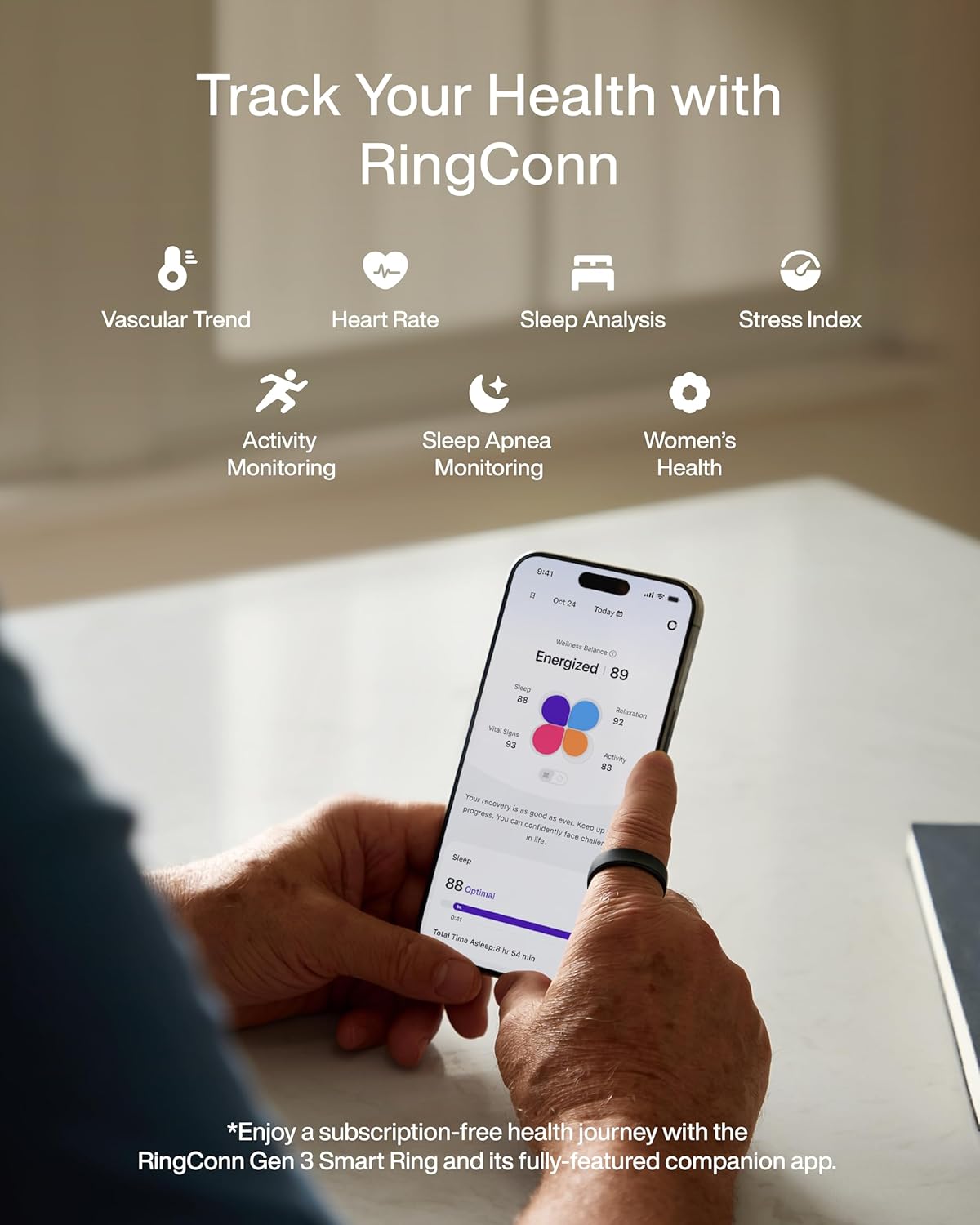
How RingConn measures stress
RingConn doesn’t measure psychological stress directly. It uses HRV (heart rate variability) as a proxy:
- High HRV → your autonomic nervous system is flexible → lower stress score
- Low HRV → your body is in fight-or-flight mode → higher stress score
The ring samples HRV throughout the night and periodically during the day. The stress score is derived from these readings combined with resting heart rate trends.
What the stress score scale means
| Score range | Label | What it usually indicates |
|---|---|---|
| 0-25 | Low stress | Good recovery, relaxed state |
| 26-50 | Moderate | Normal workday, nothing alarming |
| 51-75 | High | Poor sleep, alcohol, illness, overtraining |
| 76-100 | Very high | Multiple stressors stacking |
What stress scores are good for
Pattern recognition over weeks. A single high-stress day means nothing. But three weeks of elevated scores? That’s a signal worth investigating.
Useful patterns to watch:
- Sunday vs Monday difference (work stress baseline)
- Correlation with alcohol or late meals the night before
- Slow upward drift over a busy month
- Drop after vacation or lifestyle change
What stress scores cannot do
- Diagnose anxiety, depression, or any medical condition
- Tell you whether a specific meeting was stressful
- Replace therapy, meditation, or clinical assessment
- Distinguish between physical stress (hard workout) and emotional stress
A heavy leg day and an argument with your boss produce similar HRV drops. The ring can’t tell them apart.
How to actually use it (practical workflow)
- Ignore individual days. Look at 7-day and 30-day averages only.
- Tag unusual days in the app notes. “Alcohol,” “bad sleep,” “deadline week” — context makes the data meaningful.
- Compare periods, not points. “Was March more stressful than February?” is a useful question. “Why was Tuesday a 67?” is not.
- Pair with sleep score. Stress and sleep are tightly linked. If stress is high and sleep is poor, fix sleep first — the stress score often follows.
RingConn stress score vs Oura stress
Oura calls their equivalent metric “Resilience” (formerly part of Readiness). Both use HRV as the primary input. The main differences:
- RingConn shows a dedicated stress number; Oura folds it into the Readiness composite
- Neither is clinically validated for stress measurement
- Both are useful as trend indicators, not diagnostic tools
What to read next (pick your path)
If you’re deciding what to buy:
If you want cleaner data:
If workouts matter: