RingConn temperature tracking explained: what it’s good for
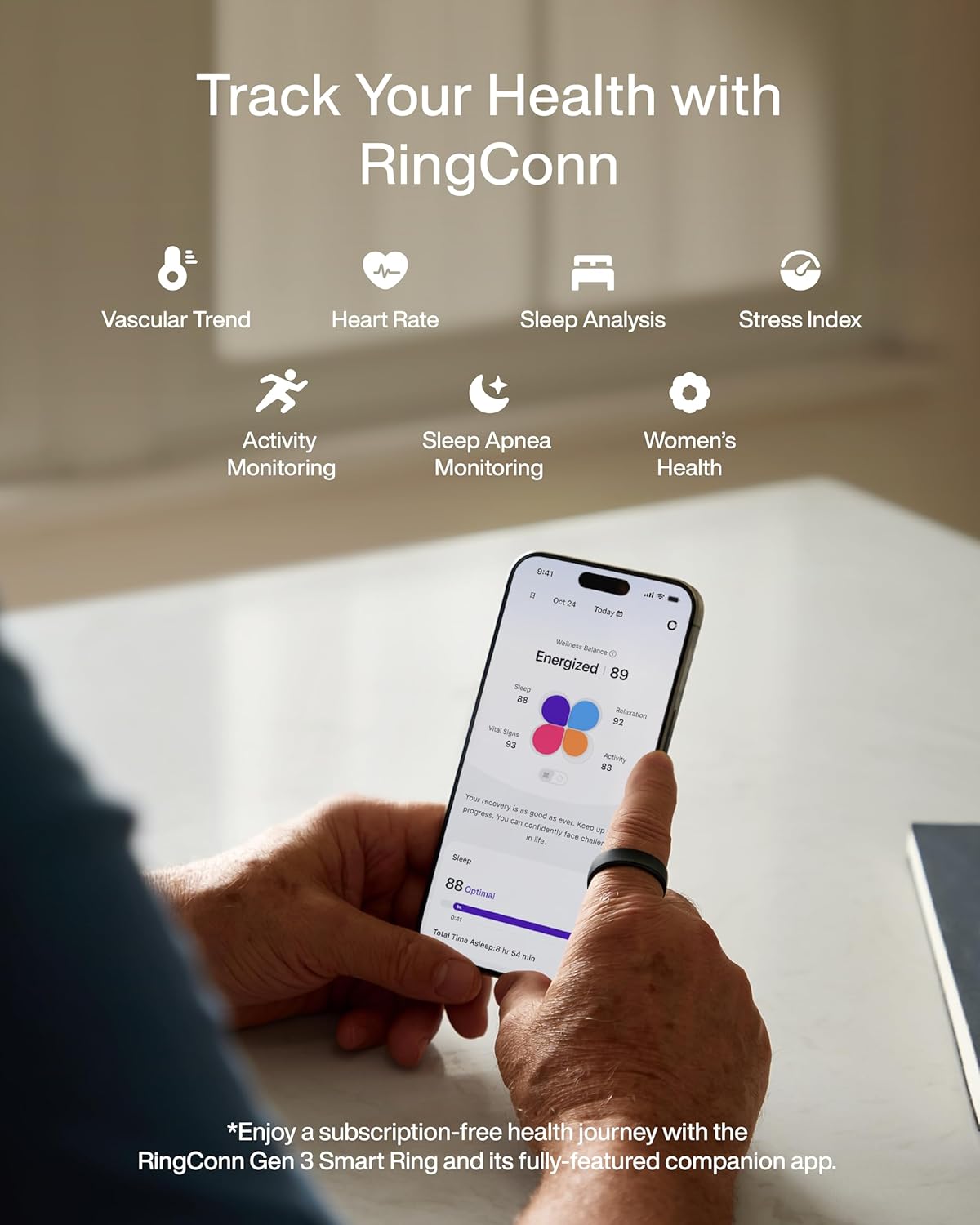
How RingConn measures temperature
RingConn uses an infrared skin temperature sensor on the inner surface of the ring. It measures relative changes from your personal baseline — not absolute body temperature like a thermometer.
Key distinction:
- Thermometer: “You are 37.2°C right now”
- Ring: “You are 0.4°C above your personal average tonight”
The ring reports a deviation (positive or negative) from your baseline, which builds over the first 2 weeks of wear.
What temperature tracking is useful for
Cycle tracking (for women). Basal body temperature rises 0.2-0.5°C after ovulation. The ring can detect this shift with enough data, making it useful for:
- Identifying ovulation window (retrospectively, not predictively)
- Confirming cycle phase
- Pairing with other symptoms for fertility awareness
Early illness detection. A rising temperature trend over 2-3 nights, combined with elevated resting heart rate, often indicates your body is fighting something — sometimes 1-2 days before you feel symptoms.
Recovery monitoring. After intense training blocks, sustained elevated temperature can signal overtraining. Athletes use this alongside HRV to judge recovery status.
What temperature tracking cannot do
| Expectation | Reality |
|---|---|
| Replace a thermometer for fever checks | No — it measures relative change, not absolute temperature |
| Predict COVID or illness in real-time | No — it shows trends, not instant diagnosis |
| Work reliably from night one | No — needs 14+ days of baseline |
| Give meaningful single-night readings | No — one data point means nothing |
How to read your temperature data
Normal variation: ±0.3°C from baseline on any given night is noise. Don’t react to it.
Worth paying attention to:
- 3+ consecutive nights above baseline → possible illness, stress response, or ovulation
- 3+ consecutive nights below baseline → good recovery state, low inflammation
- Sudden spike of 0.8°C+ → likely getting sick, check other signals (resting HR, sleep quality)
RingConn vs Oura for temperature tracking
| Feature | RingConn | Oura |
|---|---|---|
| Sensor type | Infrared skin temp | NTC thermistor |
| Measurement timing | Overnight | Overnight |
| Deviation display | Yes | Yes |
| Cycle prediction | Basic | Advanced (Oura integrates with Natural Cycles) |
| Illness alert | Informal (trend view) | “Your temperature is elevated” notification |
Oura’s temperature tracking is more mature with better algorithmic integration. RingConn provides the raw data but fewer insights. For basic cycle awareness and illness early-warning, RingConn is sufficient. For detailed fertility tracking, Oura or a dedicated device (Tempdrop) is better.
Tips for accurate temperature readings
- Wear the ring on the same finger every night. Different fingers have different blood flow and temperature profiles.
- Ensure proper fit. A loose ring with air gaps gives less consistent readings.
- Ignore the first 2 weeks. The baseline is still building.
- Don’t drink alcohol before comparing nights. Alcohol raises skin temperature by 0.5-1°C and skews readings.
What to read next (pick your path)
If you’re deciding what to buy:
If you want cleaner data:
If workouts matter: