Can RingConn Tell When You're Getting Sick? Illness Detection Explained
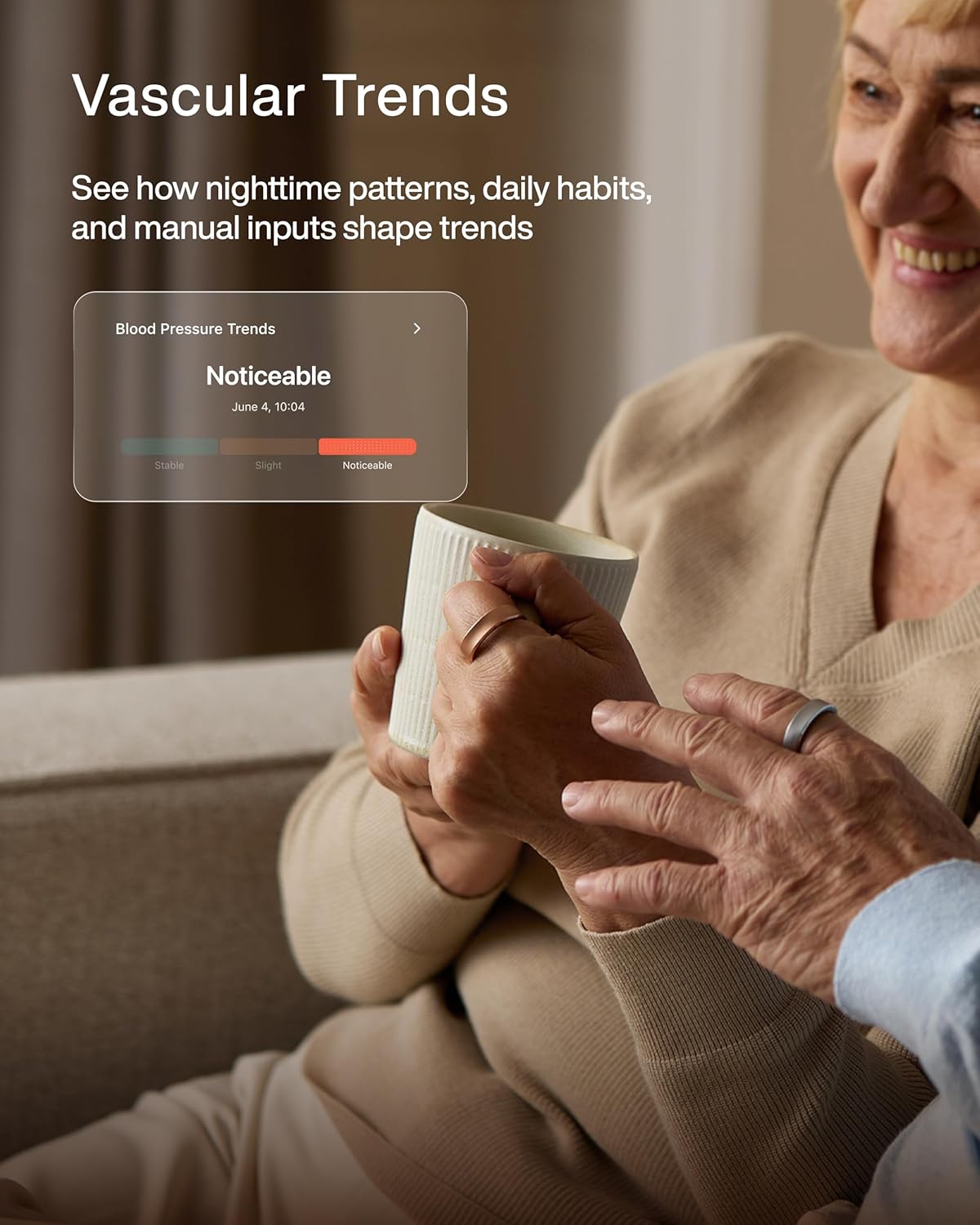
Short answer: RingConn has no official illness detection feature, but overnight temperature spikes, elevated resting heart rate, dropped HRV, and lower SpO2 often appear 24-48 hours before you feel sick. Watch for multiple metrics changing together — that’s the strongest signal.
What happens in your body before illness symptoms
When your immune system activates (fighting a virus or bacteria), your body changes measurably before you feel sick:
- Immune response begins → body temperature rises slightly
- Heart works harder → resting heart rate increases
- Stress hormones rise → HRV drops
- Inflammation increases → sleep quality degrades
- Respiratory effects → SpO2 may dip slightly
Smart rings capture all of these overnight, often before your conscious mind notices anything.
The four metrics to watch
1. Skin temperature elevation
What to look for: +0.5°C or more above your personal baseline for 2+ nights
RingConn tracks overnight skin temperature deviation from your rolling average. Illness causes your immune system to raise core temperature, which shows up as skin temperature elevation.
Limitation: RingConn measures relative change, not absolute temperature. A +0.5°C skin rise might mean a +0.3°C core rise — not enough to detect low-grade illness definitively. Clinical fever detection requires a thermometer.
2. Elevated resting heart rate
What to look for: 5+ bpm above your personal baseline overnight
Your heart rate increases to support immune activity and fight infection. This is often the earliest and most consistent signal — even before temperature changes.
Example: If your normal overnight average is 58 bpm and you suddenly see 65 bpm with no obvious cause (no alcohol, no hard workout, not hot room), illness is a likely explanation.
3. Dropped HRV
What to look for: HRV 20%+ below your rolling average
Immune activation shifts your body toward sympathetic dominance (fight mode), suppressing parasympathetic recovery. HRV crashes during illness — often dramatically.
Research: Studies from Stanford and Scripps Translational Science Institute found wearable HRV changes detected COVID-19 in 63-76% of cases before symptom onset.
4. SpO2 changes
What to look for: Average overnight SpO2 dropping below your norm (e.g., from 97% to 94%)
Respiratory illnesses (flu, COVID, pneumonia) directly affect oxygen uptake. Even subtle SpO2 drops can precede respiratory symptoms.
Note: Individual SpO2 variation is normal. One lower night isn’t meaningful. A 3+ point drop sustained over 2+ nights alongside other metric changes is significant.
What a “pre-illness” pattern looks like
Normal night:
- Temperature: baseline ±0.1°C
- Resting HR: 58 bpm (normal)
- HRV: 52ms (normal)
- SpO2: 97% (normal)
- Sleep score: 82/100
Pre-illness night (24-48 hours before symptoms):
- Temperature: +0.6°C above baseline ⚠️
- Resting HR: 65 bpm (+7 from baseline) ⚠️
- HRV: 38ms (-14ms from baseline) ⚠️
- SpO2: 94% (slight drop) ⚠️
- Sleep score: 61/100
Multiple metrics diverging together is far more meaningful than any single metric change.
Research on wearable illness detection
Stanford 2020 (COVID study): Smartwatch heart rate and HRV data detected COVID-19 up to 9 days before diagnosis. 63% of COVID+ participants showed wearable changes before symptom onset.
Scripps 2021: Wearable temperature + HR detected influenza-like illness 1-2 days before symptom onset in 80% of cases.
Oura Ring COVID study: Temperature deviation was the strongest individual predictor, but HRV + HR combination improved accuracy.
RingConn tracks all three metrics. No published RingConn-specific illness study exists, but the underlying biometric signals are the same.
Limitations
- No illness alert: RingConn doesn’t have an algorithm that says “you may be getting sick.” You must monitor trends yourself.
- Not diagnostic: Elevated temperature + low HRV could be overtraining, bad sleep, stress, or hangover — not just illness.
- Skin vs core temperature: Skin temperature is an imperfect proxy. A ring can’t replace a thermometer.
- Individual variation: You need 2-4 weeks of baseline data before deviations are meaningful.
How to use RingConn for illness awareness
Build your baseline first: Wear the ring for 3-4 weeks to establish your normal ranges. The app builds a rolling average automatically.
Watch weekly trends: Open the app weekly and look at temperature, HR, and HRV trends. Sudden divergence across multiple metrics = pay attention.
Context matters: Before assuming illness, rule out:
- Hard workout 24-48 hours prior (suppresses HRV)
- Alcohol consumption (raises HR, lowers HRV)
- Hot sleeping environment (raises temperature)
- Stress or poor sleep (lowers HRV)
When multiple metrics shift with no obvious cause: Consider reducing activity, increasing sleep, and staying hydrated. You might be fighting something off.
The bottom line
RingConn can’t diagnose illness, but it’s a useful early warning system if you know what to look for. The combination of rising temperature + elevated resting HR + dropping HRV — especially when you can’t explain it with training or lifestyle factors — is worth taking seriously.
Many users report catching illness early enough to rest, hydrate, and recover faster. Think of it as a personal health radar: not definitive, but worth listening to.