What Is a Normal Sleeping Heart Rate by Age? Read Your Ring Correctly
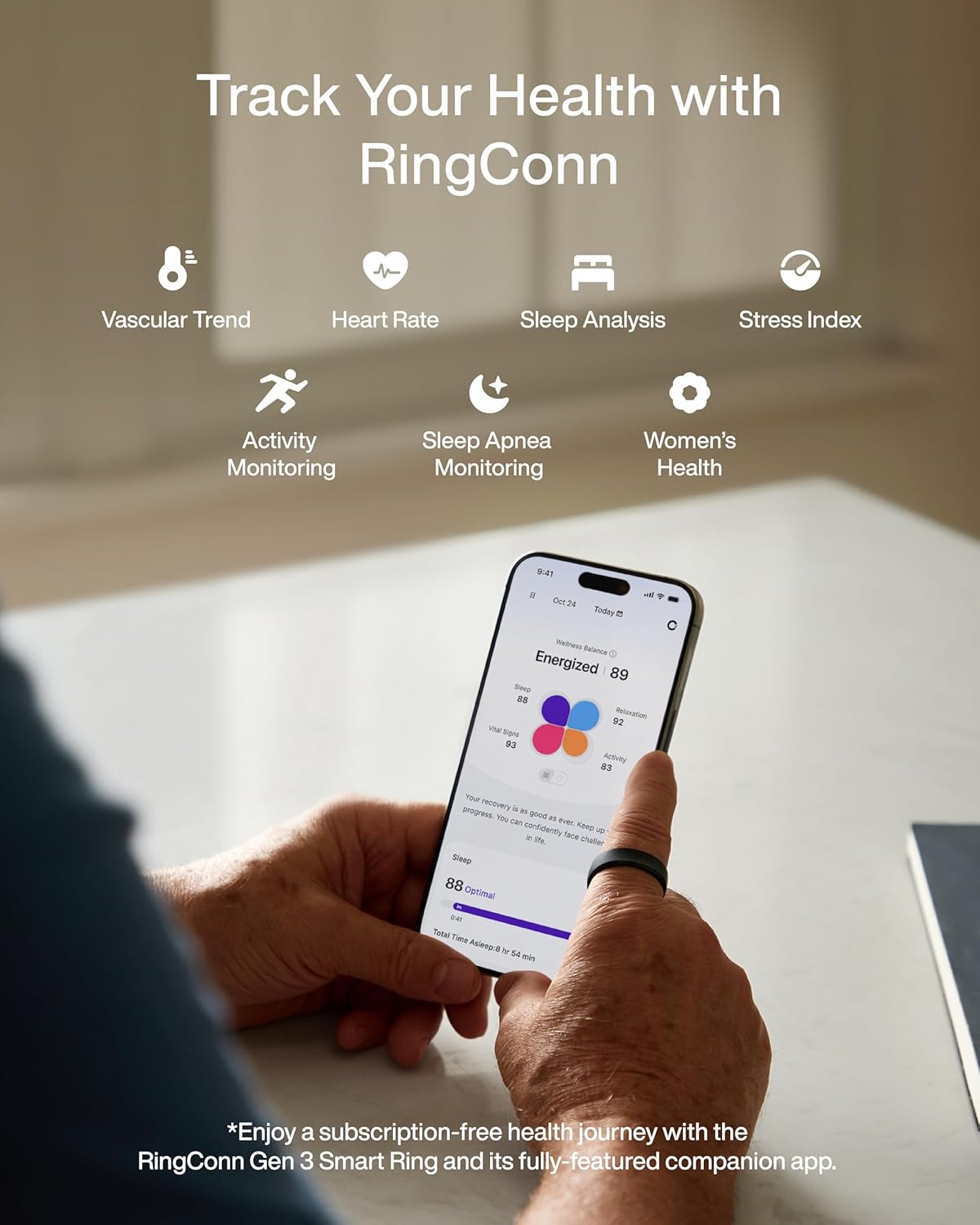
For many healthy adults, sleeping heart rate falls roughly around 50-75 beats per minute (bpm). Age adds context, but it does not give every person a precise safe range. Before judging a smart-ring reading, identify whether it is an overnight average, a minimum, or a brief peak, then compare it with your own history.
Our view: the most useful question is not “Am I average for my age?” but “Is this a comparable reading, has my pattern changed, and what should I do about it?” An age chart can describe other people. It cannot clear a symptom or explain your change.
If you currently have palpitations with chest pain, shortness of breath, dizziness, or fainting, seek urgent medical help. Do not wait for a better sleep score or another night of data. This article is an interpretation guide, not an individual medical assessment.
What is a normal sleeping heart rate by age?
Cleveland Clinic’s sleeping-heart-rate guide gives the general adult range above and explains that heart rate varies with sleep stage, fitness, medications, and health conditions. Children have different patterns; the adult guidance on this page should not be applied to them.
A useful adult age guide looks like this:
| Adult age | What to consider alongside the number |
|---|---|
| 18-39 | Fitness, your usual readings, sleep conditions, and symptoms |
| 40-59 | The same checks, plus relevant hormonal or medication changes |
| 60 and older | Your medical history, medication effects, and any new symptoms |
These are practical review prompts, not age-specific medical thresholds. None of the rows says that a sudden change is explained by age alone.
Oura’s analysis of 25,759 members aged 20-85 found different age patterns for men and women, including different ages at which average resting heart rate peaked. That is more nuanced than the idea that heart rate must rise or fall by a fixed amount each decade. These are observations in wearable users, not a clinical reference interval for every adult.
A birthday is a poor explanation for an overnight jump. If your number changed this week, start with what changed this week rather than selecting a new age band.
Are you comparing the same heart-rate measurement?
This is the first check we would make before interpreting any disagreement between a ring, watch, or online chart.
| App label | What the number describes |
|---|---|
| Average overnight HR | A summary across captured readings during the night |
| Lowest overnight HR | The lowest value or low-period summary the app reports |
| Peak overnight HR | A high point, potentially around waking or movement |
| Awake resting HR | A reading while you are awake and resting |
Oura’s support documentation explicitly separates average and lowest nighttime RHR. Check your own app’s definition; brands do not necessarily calculate every summary the same way.
A fictional example: your ring reports a lowest value of 48 bpm and a night average of 61 bpm. Those can both describe the same night. Comparing 48 with a chart of nighttime averages would make your result look lower than the like-for-like comparison.
Likewise, a manual pulse check after getting out of bed does not validate the ring’s earlier sleeping minimum. The recording conditions changed.
Our recommendation: choose one clearly labeled metric for your routine review. Keep the device and recording conditions comparable. If you change rings, expect to build a new history rather than treating the first new number as a health change.
What do large smart-ring datasets tell you?
They show how readings are distributed among the people using that product. They do not determine the right number for you.
Ultrahuman’s current explainer reports a median overnight resting heart rate of 56.9 bpm among 532,149 members with at least seven valid nights. Its lower and upper quartiles are 52.2 and 62.0 bpm.
That means the middle half of that sample sits approximately between those quartiles. It does not mean everyone outside that interval is unhealthy, or that the sample represents all ages and medical conditions. The page was updated in July 2026; those figures should not be presented as a separate 2023 clinical study.
Our practical takeaway is to use population data for orientation and personal history for comparison, while using symptoms and medical assessment to decide whether a change needs attention. None of those three can safely replace the others.
Is 40, 60, or 80 bpm during sleep a reason to worry?
A number without its label and context is not enough. Consider these examples:
- A low reading in someone who trains regularly: low rates can occur during sleep, but being fit does not make every new low harmless.
- A familiar average around 60: it may match your established pattern, but it does not rule out a problem if you have symptoms.
- A reading around 80: a brief point near waking is different from an average that has risen and stays elevated.
- A value that suddenly differs from your usual nights: check recording quality and investigate the change instead of using an age average as reassurance.
The American Heart Association notes that sleep, training, medications, and other factors affect heart rate, and advises discussing rates that have become slower or faster than usual.
Cleveland Clinic also identifies sleeping readings below 40 or above 100 bpm in adults as outside its broad usual range, with interpretation depending on the person. Repeated extreme readings deserve clinical discussion and confirmation; they are not a self-diagnosis from a ring. Symptoms can make assessment necessary at other values too.
What should you do when your sleeping heart rate changes?
1. Check how you feel before checking the score
If you have concerning symptoms, act on those first. A reassuring ring score is not a reason to delay care.
If you feel well and the surprise is confined to the app, you have time to inspect what was recorded. That is a data check, not a medical all-clear.
2. Check the recording before explaining it
Open the timeline. Was the whole night captured? Did the app include time you were awake? Are there long gaps around the unusual point? Did you switch devices, install an update, or change which metric you are reading?
For fit or missing-data questions, see our RingConn accuracy guide. A loose ring can justify a recording check, but it should not become your automatic explanation for every odd number.
3. Note what changed without assigning a cause
Record relevant circumstances: feeling unwell, alcohol, disrupted sleep, travel, unusual training, stress, caffeine, or a medication change. These are useful discussion points, not proof of what caused the reading.
For example: “Higher than my usual night average after short sleep; feel tired” is more useful than “The ring says I am ill.”
Do not change prescribed medication to improve a wearable number. If a prescription changed near the start of the pattern, tell the prescribing clinician.
4. Decide whether you are seeing an isolated result or a repeated change
Use the app’s recent history under comparable conditions. A single point, an entire high night, and a repeated shift are different observations.
There is no rule here that a rise must exceed five beats or last a week before it matters. Contact a clinician for a persistent unexplained change or sooner if the result or your symptoms concern you. If you already have a heart condition, follow the limits and instructions agreed with your care team.
How can you make the information useful for a clinician?
Bring a short record rather than dozens of unexplained screenshots:
- Your device model and the exact metric displayed.
- Your usual pattern and when the change began.
- Screenshots showing the timeline, gaps, or repeated readings.
- Symptoms and when they occurred.
- Relevant medication, sleep, illness, or routine changes.
A clinician may need a pulse check, ECG, or another appropriate assessment. A ring chart does not identify the electrical rhythm behind a change.
The NHS arrhythmia guidance advises urgent help for current palpitations with chest pain, breathlessness, dizziness, or fainting. If those symptoms have stopped, it advises urgent clinical follow-up. Do not wait for your chart to cross a numeric boundary.
What if the change only happens at night?
Nighttime-only patterns can still deserve assessment, particularly with symptoms such as witnessed breathing pauses or repeatedly waking gasping. A heart-rate chart cannot establish the cause or diagnose sleep apnea.
Use our sleep-apnea ring guide to understand what consumer screening can and cannot tell you. Our nighttime heart-rate spike article covers questions to investigate, but the value of either page is preparing a better question for professional care.
Should you try to lower your sleeping heart rate?
Aim for better sleep and sustainable health habits rather than the lowest possible app number. Improving a late bedtime, getting appropriate regular activity, or reducing a habit that disrupts sleep can be useful even when the next morning’s heart rate barely changes.
Change one manageable habit at a time and note how you feel. Do not buy supplements, add excessive exercise, or stop medication just to beat an age chart. Lower is not always better, and a sudden drop deserves the same care in interpretation as a rise.
For routine use, leave the app with three observations: which metric changed, whether the recording is comparable, and what action is appropriate. That is a more useful result than deciding whether you are above or below the average for strangers your age.
Updated November 10, 2026: removed an unverified age-by-sex reference table, unsupported fixed bpm effects, and a blanket one-week waiting rule. The interpretation steps are The Smart Ring Lab’s editorial recommendations; clinical and manufacturer guidance was checked on that date.